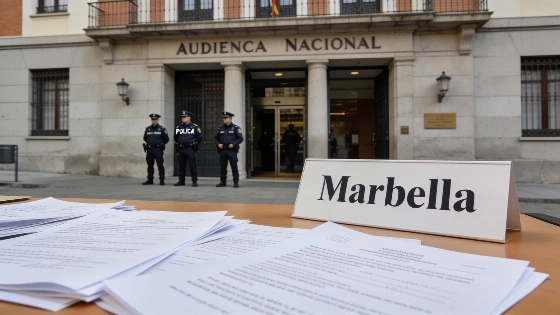
The Audiencia Nacional has sentenced Francisco Granados to prison for manipulating public contracts in Madrid and PP-run municipalities. The case exposes how political influence shaped event spending over several years.
Francisco Granados, once a key figure in the governments led by Esperanza Aguirre, has been sentenced by the Audiencia Nacional to two and a half years in prison. The court found that Granados orchestrated the manipulation of dozens of public contracts for festivals and events across the Community of Madrid and several municipalities governed by the Partido Popular (PP). These contracts, awarded between 2007 and 2014, consistently favored Waiter Music, a company at the center of the corruption scheme.
According to the court's findings, Granados maintained significant influence over decision-making bodies, even without holding direct administrative authority. The judges concluded that he benefited from this position by regularly receiving non-monetary perks, such as private events paid for by businessman José Luis Huertas. Huertas, identified as a central figure in the scheme, could not be prosecuted due to his death.
The ruling also highlights that the PP in Madrid, along with its leadership, gained access to a company willing to provide both official and unofficial services. These included additional event features requested by politicians, as well as private services for municipal PP events or individual members—none of which were ever invoiced. This arrangement, the court noted, blurred the lines between public and private interests in the allocation of public funds.
Granados is not the only official facing consequences. The court also sentenced former Valdemoro mayors José Carlos Boza and José Miguel Moreno to four and two years in prison, respectively. Additionally, María Ángeles Herrera, former mayor of Ciempozuelos, and Carlos Alberto Estrada, former mayor of Moraleja de Enmedio, each received two-year sentences. These convictions underscore the widespread nature of the contract manipulation scheme within local administrations.
Corruption cases involving public officials have drawn increasing scrutiny in Spain, especially when they reveal systemic practices that undermine trust in local governance. The exposure of such schemes often leads to broader discussions about transparency and accountability. For example, another recent high-profile case in Alicante resulted in lengthy prison terms for a couple convicted of a violent crime, as detailed in this report on a court verdict involving a separate criminal case. While the nature of the offenses differs, both cases highlight the ongoing challenges Spanish courts face in addressing abuses of power and breaches of public trust.
The sentencing of Granados and other former mayors marks a significant moment in the ongoing effort to combat corruption in Spain's public sector. The case serves as a reminder of the importance of oversight in public contracting and the risks posed when political influence overrides established procedures. As the legal process concludes for those involved, attention now turns to how such practices can be prevented in the future and what reforms may be necessary to restore confidence in local and regional administrations.