EU Introduces New Packaging Rules: What Will Change for Businesses and Customers. Starting August 12, cafés, bars, and restaurants in Spain are required to stop using plastic packaging for sugar, cream, sauces, and other products. The new European regulations will impact familiar service practices and force establishments to adjust their operations.
Starting August 12, 2026, the familiar plastic packaging for sugar, cream, sauces, oil, and jam will disappear from Spanish cafés, bars, and restaurants. This is a requirement of the new Regulation 2025/40, adopted by the European Parliament and the EU Council, aimed at reducing plastic waste in the food service sector.
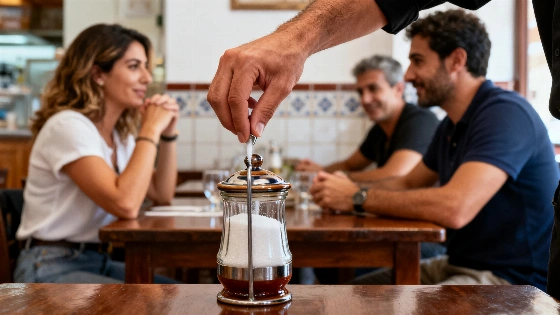
Small plastic containers for ketchup, mayonnaise, coffee cream, oil, honey, and jam, as well as single-use packets of sugar, salt, and spices—all of these must be replaced with alternative solutions. As noted by Talent24h, the individual portion system familiar to many Spaniards and tourists is becoming a thing of the past: establishments will now have to use reusable dispensers, paper packaging, or certified compostable materials. The latter are allowed only temporarily—until 2030.
What changes for establishments
For the restaurant business, this is not just a move away from packaging, but a need to rethink purchasing, storage, and service processes. The new rules require the introduction of dispensers, stricter controls for cleanliness and safety, and the search for new suppliers. The issue is especially pressing for fast food chains, hotels, and traditional cafés, where individual portions have been a standard of hygiene and convenience.
Thousands of establishments in Spain will have to adapt quickly: there is little time left for the transition. For customers, this means that familiar mini-packs will disappear from trays and tables, and sauces, sugar, and cream will be served differently.
What are the exceptions
The regulation provides for certain exceptions. For example, individual plastic packaging will remain allowed for takeaway meals if the product is intended for immediate consumption. Exceptions are also made for hospitals, clinics, and nursing homes, where individual packaging is necessary for sanitary reasons.
In addition to restaurants, the new rules will also affect shops: starting from February 2027, the use of plastic packaging for fresh fruits and vegetables weighing less than 1.5 kg will be limited.
Oversight and possible penalties
So far, the European Commission has not set specific fines for violating the new requirements. Each EU country must develop its own system of oversight and penalties by February 2027. This gives businesses time to prepare, but it is already clear: the usual service format in Spanish establishments will undergo significant changes.
According to Talent24h, packaging accounts for up to 40% of all plastic consumed and half of the paper in the EU, while packaging waste makes up a third of urban garbage. The new rules are part of a large-scale European strategy to reduce waste and transition to more sustainable consumption models.