Geely has sharply increased its export targets for 2026, aiming to ship 920,000 vehicles outside China. The move follows a major stake in Ford España and reflects shifting strategies as domestic demand weakens.
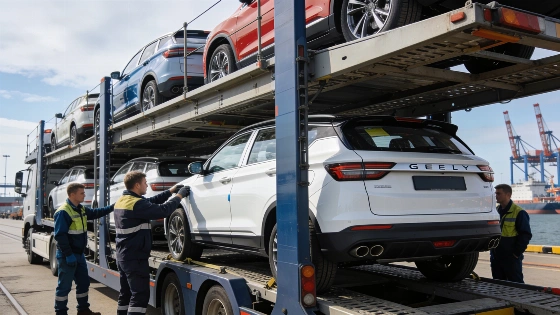
Geely has set a new pace for its global expansion, announcing a significant increase in its export targets just after acquiring a 34% stake in Ford España. The Chinese automotive group now aims to export 920,000 vehicles by the end of 2026, a 43% jump from its previous forecast of 640,000 units. This bold revision comes as Geely seeks to offset a marked decline in demand within China, redirecting its focus to more profitable international markets.
According to figures cited by elespanol motor, Geely's updated plan divides its export ambitions across several key regions: 300,000 vehicles are expected to head to Southeast Asia, 200,000 to Western Europe, another 200,000 to Eastern Europe, 200,000 to Latin America and Africa combined, and 100,000 to the Middle East and Asia Pacific. The company’s ultimate goal is to reach one million vehicles sold outside China within the year, a target that would mark a dramatic acceleration from the 420,097 vehicles Geely exported in 2025.
Our strategy is clear: as domestic competition intensifies, global markets become the key growth engine for the next decade.
In the first half of the year, exports became a central driver of Geely’s growth. Between January and June, the group sold 474,228 vehicles abroad—an increase of 158% compared to the same period last year. This figure already surpasses the company’s total exports for all of 2025 and now represents a third of Geely’s overall sales. Notably, vehicles powered by new energy technologies accounted for 277,189 of these exports, up 585% year-on-year and making up 58% of the total exported volume.
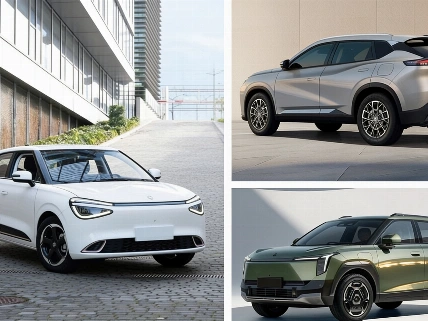
Brand-level data shows the Geely marque itself saw exports rise 138% in the first half, reaching 395,392 units. Sales of new energy models under the Geely brand soared by 752%, totaling 202,052 vehicles. The company has also introduced three export-focused models: the Geely EX5 (based on the Geely Galaxy E5, known as Geely E5 in Spain), the Geely EX2 (based on the Geely Xingyuan), and the Geely EX5 EM-i (based on the Geely Galaxy Xingjian 7, also called Geely Starray EM-i or Geely E5 EM-i in some markets). These models have quickly found success, with the EX5 leading C-segment battery-electric SUV sales in nine markets including Australia and Brazil, the EX2 topping B-segment battery-electric hatchbacks in seven markets such as Indonesia and Mexico, and the EX5 EM-i dominating C-segment plug-in hybrid SUV sales in 11 markets, including Australia and Mexico.
Geely’s ambitions extend further: the group is targeting total global sales of 3.45 million vehicles in 2026, with 29% destined for export. Achieving this would represent a 14% increase over its 2025 sales of 3.02 million units. The company’s aggressive international push mirrors a broader trend among Chinese automakers, who are increasingly looking abroad as competition and market saturation intensify at home.
This international momentum is also visible in the premium segment, where Geely’s Zeekr brand recently launched its Zeekr X compact SUV in Spain, offering up to 405 km of range and advanced features to challenge established European players. For more on this development, see the recent debut of Zeekr X in Spain.
Geely’s rapid export growth and strategic investments signal a new phase for the company, as it adapts to shifting global demand and positions itself as a major player in the evolving automotive landscape.