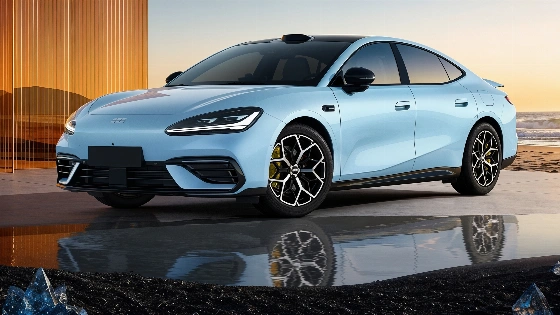
Geely has introduced the Galaxy TT, a sleek electric sedan designed to rival Xiaomi’s disruptive SU7. With up to 570 hp, three battery sizes, and a focus on price and technology, the Galaxy TT aims to shake up China’s competitive EV market.
Geely has launched a direct challenge to Xiaomi’s dominance in China’s electric sedan market with the debut of the Galaxy TT, a model that combines bold performance with aggressive pricing. The Galaxy TT, set to hit showrooms in about a month, is positioned as a compelling alternative to the Xiaomi SU7 and even undercuts premium rivals like the Porsche Taycan.
Measuring 4.99 meters in length, 1.92 meters in width, and 1.48 meters in height, with a wheelbase of 2.92 meters, the Galaxy TT stands out for its aerodynamic silhouette. The design is focused on reducing drag and maximizing range, a strategy increasingly common among new Chinese EVs. The front features a smooth fascia with LED headlights, darkened air intakes, and a LiDAR sensor mounted above the windshield, signaling Geely’s commitment to advanced driver assistance technologies.
The side profile is marked by flush door handles, compact mirrors, and sculpted rear panels, while the rear LED light signature draws clear inspiration from the Porsche Taycan—so much so that at a glance, the resemblance is striking. Inside, the Galaxy TT adopts a minimalist approach: a flat, detail-free dashboard dominated by two large screens—one for infotainment, the other for the instrument cluster. The cabin also includes a sporty three-spoke steering wheel, dual wireless phone chargers, circular air vents, and a small analog clock for a retro touch.
Performance and Range
Under the skin, the Galaxy TT is built on an 800-volt electrical architecture and offers three battery options: a 52.4 kWh pack for the entry-level model, a 63.8 kWh mid-range version, and a 75.2 kWh battery for the top trim. Depending on the configuration, the car’s range varies from 540 to 725 kilometers, based on China’s optimistic CLTC standard.
Geely provides two powertrain choices: a single rear motor delivering 329 hp, or a dual-motor all-wheel-drive setup producing 570 hp. While these figures don’t quite match the top-tier Xiaomi SU7 Ultra, they are more than enough to compete with the mid-range variants and offer a strong value proposition for buyers seeking both performance and technology.
Market Context
The arrival of the Galaxy TT comes at a time when the Chinese EV market is rapidly evolving. Xiaomi’s SU7 has already disrupted the segment by offering high performance and advanced tech at a price below €26,000, forcing established brands to rethink their strategies. Other manufacturers, such as MG with its MG 07, have also entered the fray, intensifying competition and accelerating innovation.
Geely’s move is not limited to China. The company recently announced a joint venture with Ford to produce vehicles in Europe, signaling broader ambitions beyond its home market. This international push mirrors trends seen in other regions, where electric vehicles are reshaping consumer expectations. For example, Korean brands have made headlines for their battery longevity, as highlighted in a recent analysis of Hyundai-Kia models’ performance in Sweden’s demanding climate (see how Korean EVs are setting new standards for battery durability).
As Chinese automakers like Geely and Xiaomi continue to innovate and expand, the pressure on European and global brands is mounting. The Galaxy TT’s combination of range, power, and price could make it a pivotal player in the next phase of the electric vehicle revolution, both in China and potentially abroad.