A major Swedish study of nearly 10,000 electric vehicles reveals that battery degradation is no longer a serious concern. Korean brands lead the pack, with Hyundai-Kia models showing minimal capacity loss even after 100,000 kilometers.
After analyzing the battery health of 9,954 electric vehicles sold in Sweden between 2022 and 2026, a new study has delivered a clear message: concerns about rapid battery degradation in modern EVs are largely outdated. The research, conducted by the online car marketplace Carla, used AVILOO diagnostic tools to measure actual battery capacity, rather than relying on the sometimes-optimistic estimates provided by onboard vehicle systems.
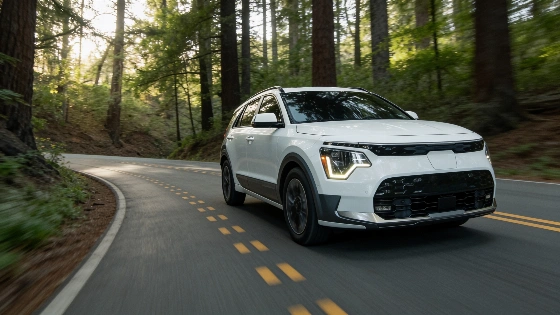
The results are striking. The Kia e-Niro emerged as the top performer, retaining 97.25% of its original battery capacity after 100,000 kilometers. Close behind was the Hyundai Kona, which shares the same 64 kWh battery, with a retention rate of 97.18%. The third spot also went to a Korean model, the Kia EV6, whose 77.4 kWh battery maintained 95.95% capacity. All three vehicles are part of the Hyundai-Kia group, outpacing not only European competitors but also premium brands and Tesla.
For those tracking Tesla's performance, the Tesla Model 3 appeared in eighth place, with its LFP 60.5 kWh CATL battery holding 93.94% of its capacity after 100,000 kilometers. The same model equipped with an NMC battery from LG Chem showed a slightly lower figure at 91.5%. These numbers still indicate robust battery health, but highlight the advantage of the Korean-made packs in this comparison.
European Brands Hold Their Own
Among European manufacturers, the Volvo XC40 with its CATL 69 kWh battery led the way, retaining 94.70% of its capacity and securing fourth place overall. The Polestar 2 (CATL 78 kWh) followed closely at 94.35%, while the BMW i3 and the Polestar 2 with an LG Chem battery posted 93.77% and 93.53%, respectively.
Other notable entries in the top 20 included the Audi e-tron 50 and e-tron 55 (93.02% and 92.93%), Skoda Enyaq iV (92.88%), Tesla Model S (92.80%), Volkswagen ID.4 (92.77%), and Tesla Model X (92.52%).
Battery Degradation: No Longer a Dealbreaker
The study’s most significant takeaway is that all vehicles in the ranking retained more than 90% of their battery capacity after 100,000 kilometers—a distance that most owners will not reach until three or four years of regular driving. This suggests that, for the vast majority of drivers, battery longevity is unlikely to be a limiting factor in the practical lifespan of their EV.
These findings echo a broader trend in the electric vehicle market, where advances in battery chemistry and management systems have dramatically improved durability. As new models continue to enter the market, such as the recently launched XPeng L03 with its focus on advanced technology and competitive pricing, as covered in our feature on XPeng’s push into Spain, the bar for battery performance is being raised across the industry.
For context, battery warranties for most new electric vehicles in Europe typically guarantee at least 70% capacity retention over eight years or 160,000 kilometers. The Swedish data suggests that, in real-world conditions, most modern EVs are far exceeding these minimums. As a result, battery health is becoming less of a worry for buyers, shifting the focus to other factors such as charging infrastructure, range, and overall vehicle value.