Spain's defence budget has nearly tripled in three years. Arancha González Laya urges open debate on this shift. She warns of growing external threats and the need for European unity.
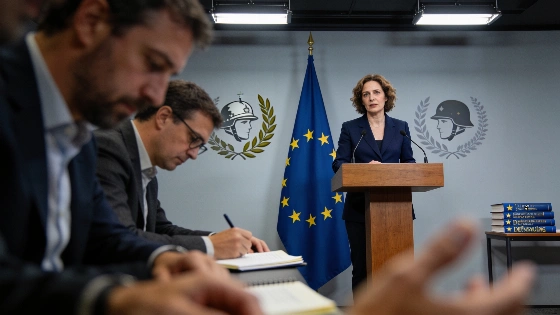
Spain's rapid increase in defence spending—from 0.7% to 2% of national wealth within three years—has triggered calls for a transparent public debate. Arancha González Laya, former Minister of Foreign Affairs and current dean at Sciences Po in Paris, highlighted the urgency of this discussion during the launch of her new geopolitical essay, Solos en el mundo, in Barcelona. She argued that such a significant budgetary shift cannot occur without involving citizens, even if the conversation is uncomfortable.
González Laya pointed to a changing global landscape where traditional certainties, such as the transatlantic alliance and the stability of international borders, are eroding. She warned that Europe faces mounting dangers from rising neonationalism and disruptive technologies. According to her, these forces are pushing European countries to reconsider their place in the world and the level of integration needed to respond effectively to external threats.
During her presentation, González Laya stressed that the European Union is under constant external pressure, though not always through conventional warfare. In Spain's case, she noted, the country is increasingly targeted by cyberattacks and interference in the information space—forms of aggression that require new strategies and resources. This context, she explained, has led to a collective increase in defence budgets across the continent.
The debate over military spending comes at a time when Europe is reassessing its vulnerabilities. González Laya identified three critical blind spots: the privatization of space by powerful private actors, the strategic importance of the Arctic and emerging trade routes, and the security of undersea infrastructure vital for international transactions. She argued that these issues demand coordinated European action rather than a return to national solutions.
With major elections approaching in four of the EU's largest countries, González Laya observed that the political divide is sharpening between those advocating for deeper integration and those pushing for the renationalization of powers. She also addressed the rise of a new brand of right-wing Europeanism, noting that all EU countries rely on migrant labor, though some are more open about it than others.
Her book, set for French release in September, presents a cautionary scenario: by 2049, Europe could find itself weakened and subordinate to other global powers if it fails to make decisive choices now. González Laya draws on her international experience to argue that the EU still has time to avoid this outcome by strengthening internal cohesion and taking a more assertive global role.
The discussion around Spain's defence budget echoes broader concerns about transparency and public oversight in government decisions. Recent controversies, such as the exposure of confidential political agendas, have intensified scrutiny of how major policy shifts are communicated and justified. For example, the recent leak of high-level political schedules has fueled debate over privacy and accountability in Spain's political sphere.
Spain's increased defence spending aligns with NATO's longstanding target for member states, reflecting a wider European trend in response to security challenges from Russia, China, and other global actors. The shift has practical implications for the national budget, public services, and Spain's role within the EU. As the country prepares for upcoming elections, the debate over defence priorities and European integration is likely to remain at the forefront of political discourse.