Fernando Grande-Marlaska rejected any self-criticism after recent unrest in Ceuta. He accused PP and Vox of fueling social division. The minister announced new border measures amid ongoing political disputes.
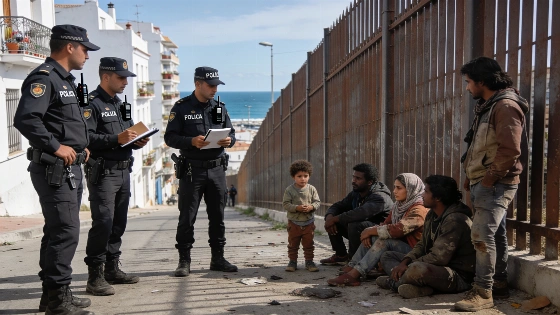
Interior Minister Fernando Grande-Marlaska has come under fire in Congress after unrest in Ceuta, where recent clashes involved both migrants and local residents. Instead of acknowledging mistakes, Marlaska focused on criticizing the opposition, directly accusing PP and Vox of stoking social division and inciting hostility with their rhetoric. He argued that recent incidents in Ceuta were aggravated by language from “the far right, and now also the right,” referencing both parties and their use of terms like “invaders” and “delinquents.”
During his first parliamentary appearance since the crisis escalated, Marlaska repeated much of the information previously shared about the Interior Ministry’s response. He avoided addressing his dispute with Defence Minister Margarita Robles over whether the Centro Nacional de Inteligencia (CNI) had issued an advance warning about the mass entry of irregular migrants on July 30 and 31. Only in his reply did he insist that no such alert was received, distancing his department from responsibility for the lack of preparation.
While Marlaska refrained from criticizing his own ministry or the government, he did acknowledge the need to “draw the necessary lessons” to better manage future border and migration challenges. He announced plans to upgrade border infrastructure, including improvements to the Ceuta fence and the deployment of new resources such as additional patrol boats, underwater drones, and aerial surveillance systems.
The minister also highlighted Morocco’s “close and effective cooperation” during the crisis, crediting this partnership for the rapid return of many of the 72,000 irregular migrants who entered Spanish territory within 48 hours. He noted ongoing operational coordination with Moroccan authorities, both at the political and police levels, and stated that thousands of attempted maritime crossings had been intercepted this year. This position, however, drew criticism not only from PP and Vox but also from government allies such as Sumar and ERC. Sumar’s spokesperson described the July events as a destabilization maneuver with geopolitical motives, implicating Morocco, the United States, and Israel, and questioned the reality of Moroccan cooperation. ERC and EH Bildu also challenged the government’s narrative, calling the praise for Rabat “absurd.”
Political tensions remain high, with PP and Vox continuing to describe the situation as an “invasion,” and Vox’s spokesperson even labeling it a “hybrid war act orchestrated by Morocco.” The debate over the government’s handling of the crisis and the role of Moroccan authorities has exposed divisions not only between parties but also within the ruling coalition. For additional context on the government’s efforts to manage internal disagreements over the intelligence response, see this analysis of the cabinet’s attempts to align key ministers: how Moncloa sought to bridge the rift on the Ceuta crisis.
Ceuta, a Spanish enclave on the North African coast, has long been a focal point for migration flows from Africa to Europe. The city’s border with Morocco is one of the EU’s most fortified, yet it remains a pressure point for irregular crossings. The recent surge in arrivals and subsequent unrest have reignited debates over Spain’s migration policy, the effectiveness of bilateral cooperation with Morocco, and the political rhetoric surrounding migration. The government’s response, and the sharp criticism from both opposition and coalition partners, underscore the complexity and sensitivity of managing border security in a region marked by geopolitical tension and humanitarian challenges.