The Cortijo del Fraile in Níjar, Almería, will be restored as a cultural and artistic centre. Authorities aim to revive the abandoned landmark, investing €25 million to boost the region’s social and economic life.
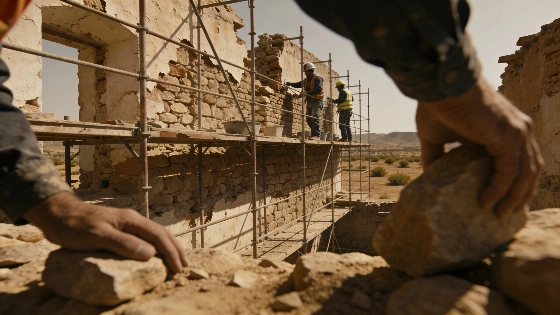
The Diputación de Almería has launched a major project to rescue the Cortijo del Fraile, a centuries-old estate in Níjar that has stood in ruins for decades. The building, known for its links to the 1928 crime that inspired Federico García Lorca’s Bodas de sangre, will be transformed into a centre for arts, culture, and local heritage. The initiative follows years of public pressure and failed attempts to save the site, which had become a symbol of abandonment in the region.
Located over 20 kilometres from Níjar’s urban centre, the Cortijo del Fraile has long been isolated among the arid hills of Cabo de Gata. Originally built in the 18th century as a Dominican friary, it later passed into private hands after the 19th-century land reforms. The estate’s decline accelerated in the 1960s, when it was left empty except for occasional film shoots, including scenes from Clint Eastwood’s La muerte tenía un precio and El bueno, el feo y el malo.
Despite its designation as a Bien de Interés Cultural in 2010, the cortijo continued to deteriorate. Local associations repeatedly called for intervention as the structure suffered further damage, with its chapel tower requiring emergency stabilization. The building was often used for agricultural storage or even as shelter for livestock, highlighting the lack of protection despite its historical status.
After a failed acquisition attempt by the Junta de Andalucía in 2014, the Diputación de Almería secured the property and nine hectares of surrounding land in 2022 for €1.9 million. The immediate priority was to halt the decay and develop a comprehensive master plan for restoration and future use. The plan, drafted by Corda Estudi and 3XV Arquitectos SCP, emphasizes preserving the cortijo’s original layout, including its small rooms, water cisterns, and agricultural features. Access roads will be improved but not paved, and parking will be discreetly integrated among existing olive trees to minimize visual impact.
Once restored, the site is expected to host artist residencies, traditional craft workshops, film screenings, gastronomy events, and astronomy activities. There are also plans for an annual staging of Bodas de sangre. The total investment is projected at €25 million, with the goal of revitalizing not only Níjar but the wider province of Almería. The project’s leadership stresses the importance of community input, given the cortijo’s location within the protected Cabo de Gata natural park and its lack of basic utilities like water and electricity.
Local groups such as Amigos Parque Natural Cabo de Gata – Níjar have welcomed the move, noting that previous restoration efforts often failed due to lack of ongoing activity. They argue that the new centre must remain active and accessible, with some calling for shared agricultural use with local residents. However, not all voices are optimistic. Some urban planners and residents warn that the Diputación’s control could limit broader participation and question the viability of a cultural centre in such a remote location. They point to the cortijo’s complex history, including its role in the loss of communal lands and rural depopulation, as factors that should not be overlooked.
The transformation of the Cortijo del Fraile comes at a time when Spanish authorities are increasingly focused on preserving rural heritage sites and boosting local economies through cultural investment. Similar debates over the management and future of historic properties have emerged in other regions, reflecting broader tensions between conservation, community involvement, and economic development. In a related context, the challenges of local governance and regional identity have also been highlighted in recent events, such as the political crisis faced by Ceuta’s president during a major migration surge.
As the restoration moves forward, the Cortijo del Fraile stands as both a reminder of Níjar’s turbulent past and a test case for the future of rural cultural projects in Spain. The coming years will reveal whether this ambitious plan can overcome logistical, financial, and social hurdles to deliver lasting benefits for the region.