A unique 18th-century replica of the Virgen de la Peña de Francia, kept in Cantabria, will be temporarily moved to its original sanctuary in Salamanca. The transfer ends decades of family debate and revives a lost tradition.
After more than two centuries, a meticulously crafted replica of the Virgen de la Peña de Francia, carved in 1765 and preserved in Cantabria, is set to return—albeit temporarily—to its spiritual home in Salamanca. The decision, reached after years of family discussions and logistical setbacks, marks a significant moment for both the Mazarrasa family and the religious community connected to the sanctuary.
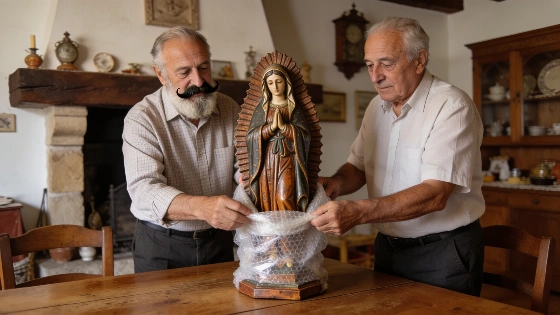
The statue, standing about 60 centimeters tall and carved from dark wood, features the Virgin Mary with ornate crowns and a richly colored mantle, holding the child Jesus. For generations, it has been safeguarded in a private home in Villaverde de Pontones, under the care of José María de Mazarrasa y De la Torre, whose ancestor commissioned the replica after the original was lost to theft and decay in the 19th century. The original image, once central to the sanctuary in Salamanca, was stolen and ultimately destroyed, leaving only fragments and the memory of its presence.
The upcoming transfer, scheduled for the weekend of September 5, 2026, will allow the faithful in Salamanca to venerate the closest surviving likeness to the lost original. The event is expected to draw members of the Hermandad de Caballeros de Santo Toribio de Liébana, who will accompany the statue in ceremonial dress, and include a choral performance in the cathedral of Ciudad Rodrigo. A floral tribute is also planned for the statue of Bishop José Tomás de Mazarrasa, who played a key role in preserving the legacy of the Virgin after the original's disappearance.
Preparations for the journey have not been without tension. The Mazarrasa cousins, Olav and José María, have debated the risks and logistics, including the need for a €60,000 insurance policy and the emotional difficulty of parting with the statue, even temporarily. Previous attempts to move the image, such as in 2005, were thwarted by unexpected weather, adding to the sense of anticipation and uncertainty surrounding this year's plan.
Once in Salamanca, the statue will be guarded day and night in the sanctuary's chapel before being brought to the mountaintop site for a symbolic ritual. There, the replica will be placed alongside the so-called “muñecón”—a later, less faithful copy created after the original's loss—allowing both images to be seen together for the first time. The ceremony will include readings from Tirso de Molina about the Virgin's discovery in 1440, followed by a communal meal to close the event.
While the family remains cautious about extending the statue's stay beyond the planned weekend, the hope is that more people will have the chance to appreciate its historical and artistic value. The debate over its future continues, with José María weighing the desire to share the statue with the public against his personal attachment and responsibility as its guardian.
This story of religious heritage and family stewardship echoes other moments when local traditions and identities have been tested by loss and recovery. In a different context, the challenges of preserving community symbols were highlighted during the border crisis in Ceuta, where residents demanded action from authorities, as reported in coverage of the Ceuta protests. Both cases reflect the enduring importance of cultural memory and the complexities involved in safeguarding it for future generations.
The Virgen de la Peña de Francia remains a powerful symbol for many in Salamanca and beyond. Its temporary return is not only a gesture of reconciliation with the past but also a rare opportunity for collective remembrance and renewed devotion.
For context, the original sanctuary of the Virgen de la Peña de Francia is a significant pilgrimage site in western Spain, attracting visitors for centuries. The loss of the original statue in the 19th century was a major blow to the local community, and the existence of this faithful replica has helped maintain the tradition. The upcoming event is expected to draw attention from both religious and cultural circles, highlighting the ongoing relevance of such artifacts in Spain's regional identity.