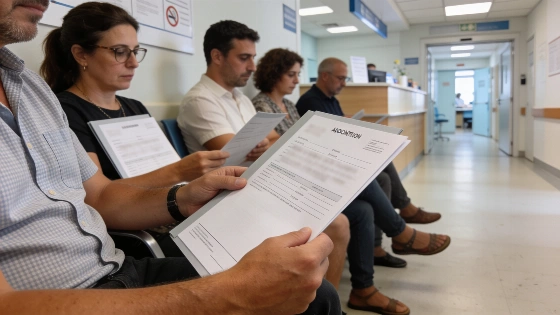
Hospital 12 de Octubre will outsource up to 6,350 ultrasounds over six months. The move follows a €300 million renovation but comes amid rising demand and staff shortages. Patients from 19 primary care centers will be affected.
Hospital 12 de Octubre, one of Spain’s largest public hospitals, has begun outsourcing thousands of diagnostic ultrasounds to private clinics. The decision comes less than three years after the hospital opened a new building following a €300 million investment aimed at boosting its capacity and technology. Despite this upgrade, the hospital now faces a surge in demand it cannot meet with its own resources, according to documents published on the Community of Madrid’s public procurement portal.
The new contract, valued at €139,700, will allow up to 6,350 ultrasounds to be performed externally over a six-month period. Most of these scans are for patients referred from 19 associated primary care centers, with a focus on less complex cases such as musculoskeletal issues and chronic conditions. The contract specifies that the external provider must offer appointments at least three days a week, both mornings and afternoons, requiring patients to travel to the private facility for their scans.
Hospital sources insist this is not a true outsourcing, describing the contract as a backup measure to avoid delays when demand spikes. However, the official tender documents confirm that an external provider will handle a significant share of routine ultrasounds, including scans of the neck, abdomen, urinary tract, pelvis, scrotum, testicles, soft tissues, and joints. The hospital’s radiology department currently covers only about 25% of these requests through an extraordinary management agreement, with two extra afternoon schedules added to cope with the backlog.
Staff at several Madrid health centers have reported persistent problems scheduling ultrasounds for their patients, with some appointments never being set and administrative staff finding appointment books closed. As a result, many patients leave without a date for their scan and are not officially added to waiting lists. The new contract requires the external provider to connect to the Madrid Health Service’s network to exchange appointments, images, and reports, while the hospital’s own resources will be reserved for more complex or inpatient cases.
The move has sparked strong criticism from opposition parties. Marta Carmona, health spokesperson for Más Madrid, called the decision “outrageous” for a hospital of such complexity and technical level, arguing it reflects a broader pattern of neglecting core public health services. She pointed to similar situations at other hospitals, where radiology services have been allowed to deteriorate, leading to further outsourcing. Socialist assembly member Carlos Moreno linked the measure to a sharp rise in waiting lists and accused the regional government of preferring to contract out services rather than fund public hospitals to operate at full capacity, especially in the afternoons. He also questioned the cost-effectiveness and quality of outsourced scans, noting that private clinics tend to accept only the most profitable, straightforward cases.
Hospital 12 de Octubre serves over 450,000 residents and is considered a reference center in Madrid. The recent investment in its infrastructure was intended to modernize and expand its services, but the current situation highlights ongoing challenges in staffing and resource allocation. Outsourcing basic diagnostic tests has become a recurring solution in the region, raising questions about the sustainability of public healthcare funding and the balance between public and private provision.
In Spain, public hospitals are generally expected to provide core diagnostic services in-house. However, rising demand, staff shortages, and budget constraints have led to increased reliance on private providers for routine tests in several regions. The debate over outsourcing in Madrid reflects broader national concerns about the future of the public health system, especially as waiting lists and resource pressures continue to grow.