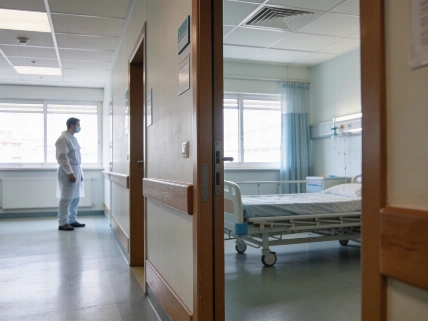
A 61-year-old cancer patient died after contracting Mpox at Hospital Donostia. More than 30 contacts are under medical surveillance as Osakidetza defends its response.
The patient had spent weeks at Hospital Donostia in San Sebastián while being treated for cancer and was already immunosuppressed. He later died after contracting Mpox during his stay.
This is the first death in Euskadi involving the infection. Doctors have not definitively established that Mpox directly caused it. Euskadi’s Department of Health considered it highly likely that the infection contributed to the death, while the official account has not identified Mpox as the sole or direct cause.
The man shared a room for several days with another patient whose positive diagnosis was confirmed later. He had initially been admitted with a throat complication and did not show the characteristic skin lesions associated with Mpox. Early tests pointed to another infection, so he received antibiotics before further testing identified the virus.
That atypical presentation matters in an immunocompromised hospital patient. Without visible lesions, recognition and isolation can be delayed.
The San Sebastián death was reported as the third Mpox-related death in Spain in 2026; the two earlier patients were living with HIV.
The hospital says it applied the protocol correctly. Reports from RTVE and other Spanish media say the available evidence does not establish a deliberate breach of hospital procedures.
Osakidetza maintains that the two men were not together after the infection became known. Its guidance requires a patient with Mpox to remain in an individual room with a private bathroom until the lesions disappear or the patient is discharged. After discharge, physical contact and sexual relations should be avoided until the skin has completely healed.
Miguel Ángel Goenaga, head of Infectious Diseases at Hospital Donostia, said home isolation is normally preferred. The patient believed to have transmitted the infection was discharged after his condition improved and is now being monitored at home. He is reported to be in good health.
The family says the patient was recovering from planned surgery for a throat tumour and that Osakidetza told them Mpox had begun on 16 September, roughly four to five days before symptoms appeared. This account differs from the hospital’s formulation and has not resolved the chronology of the infection.
The exact route of transmission inside the hospital remains unknown. Goenaga said such transmission is uncommon. He suggested that the men might have come into contact at night or shared an object.
The victim’s relatives told the newspaper that he spent less than a week with the other patient and had been undergoing rehabilitation before contracting the virus. They also said staff began wearing masks in the room without initially explaining why.
According to the family, they were informed two days later after repeatedly asking about the situation. The room was then disinfected.
More than 30 people, including relatives and healthcare workers, have been identified as close contacts and vaccinated or placed under follow-up. Osakidetza said approximately 30 people who had close contact with the two infected patients were offered vaccination and medical monitoring.
The monitoring will last 21 days. Contacts must check their temperature and watch for skin lesions. Those lesions can pass through several stages before forming and shedding a scab.
The family’s account and the official explanation leave the central issue unresolved: how the virus crossed between patients despite the hospital’s stated procedures. The case was also covered in an earlier report by Russpain.
Health officials say the man had very serious illnesses. They also say a bacterial infection present before Mpox probably played the main role in his final deterioration. Oskar Ortiz de Guinea said any infection can worsen the condition of an immunosuppressed patient.
The death occurred on Tuesday evening. The Department of Health has confirmed it while maintaining that Mpox’s precise medical contribution has not been definitively established.
Mpox spreads through close contact between people or between animals and people. Its incubation period ranges from five to 21 days. Common symptoms include fever and headache. Muscle pain, swollen lymph nodes, exhaustion and a rash can follow, with the rash spreading from the face to other parts of the body.
Goenaga described transmission as limited and said mortality from the virus is below 5%. He also characterised transmission within a hospital as rare.
Osakidetza considers new cases linked to the hospital incident highly unlikely after preventive measures were activated. Euskadi recorded 299 cases by the end of last September, while Spain recorded 10,535.
In the Basque Country, six cases were identified in 2025. There were 35 during the first nine months of this year: eight in Gipuzkoa, 21 in Bizkaia and six in Álava. The authorities say every recorded case in Euskadi received vaccination and medical follow-up.
Reports published by El Mundo and Sur in English put the cumulative number for the Basque Country at 245 since the beginning of the global outbreak in 2022. They also confirm the 35 cases recorded in 2026. The figures use different reporting cut-offs and should not be treated as interchangeable without clarification.
Mpox emerged in human medicine in 1970 in the Democratic Republic of the Congo and spread globally during outbreaks in 2022. In San Sebastián, an immunosuppressed patient became infected in hospital, the transmission route remains unknown, and more than 30 contacts are being monitored.
Osakidetza’s defence of the protocol fits the facts presented. The unexplained transmission between patients has focused attention on individual isolation and early recognition of atypical symptoms. Prompt communication is also part of the infection-control response.
Available reports describe the case as a lesson for hospital screening, but do not report any formal revision of Osakidetza’s protocol.