What’s Served at the Spanish Prime Minister’s Residence: Cuisine, Protocol, and Menu Secrets. At La Moncloa, the kitchen operates by special rules: the menu depends on the agenda, and every reception shapes the country’s image. Why dishes for ministers and guests are chosen according to protocol and how the residence kitchen works — in our report.
In the residence of the Prime Minister of Spain, La Moncloa, the kitchen has long been more than just a place where food is prepared. Here, every dish is part of the political process, and the choice of menu depends on what is happening behind closed doors in the offices. If a cabinet meeting drags on, the chefs focus on light dishes to keep no one from nodding off. But when foreign leaders visit, the table features products and recipes meant to highlight the Spanish character and the country's stature.
The menu at La Moncloa is never put together by chance. As the kitchen staff point out, the main criterion is the agenda. For long meetings, they select dishes that won’t cause drowsiness or hinder concentration. For diplomatic dinners, it's the opposite: the emphasis is on traditional products such as olive oil, meat, fish, and Spanish wines. This approach turns mealtime into a tool of soft power, where gastronomy becomes a part of the national image.
The kitchen under control
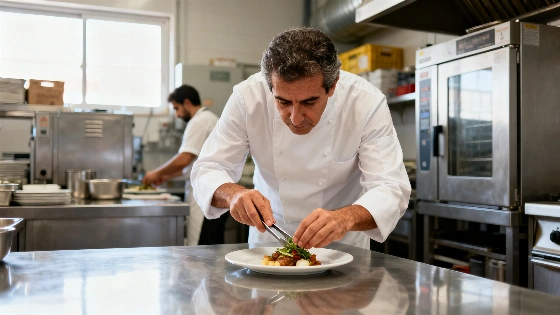
Running the kitchen at La Moncloa requires not only skill, but also precise knowledge of protocol. Here, not only speed is important but also the ability to adapt to an ever-changing schedule: sometimes breakfast has to be prepared in a matter of minutes, other times it means waiting for the next round of negotiations to end. It's crucial that serving food does not interfere with the flow of events, and that the kitchen itself remains an invisible but efficient part of the machinery of power.
There are heroes among the team of chefs. For example, José Roca started out in 1978 washing dishes and eventually became the head chef of the residence. Francisco Pedro Bailo emphasizes that the main quality needed for the job here is responsibility: even the slightest mistake can result not only in a ruined dinner, but also in a diplomatic scandal. Julio González, author of the book “La cocina de Moncloa,” recalled that he was hired after he cooked simple crepes—a modest dish for such a prestigious place.
Security and Protocol
At La Moncloa, food safety is taken with utmost seriousness. Every ingredient is inspected, all dishes are labeled, and everything is checked to meet sanitary standards. As Francisco Pedro Bailo explains, not a single mistake can be allowed here: food poisoning or even a minor mishap can have serious consequences. That is why the kitchen operates on the principle of ‘one eye on the pan, the other on the protocol.’
Gastronomy as Part of Politics
When foreign guests are received at La Moncloa, the kitchen becomes part of the diplomacy. Dishes are chosen so that they reveal more about the country than any official toast. Traditional ingredients are combined with modern techniques, and every menu strikes a balance between respect for the guest and showcasing Spanish gastronomy. This approach not only feeds but also impresses—sometimes more important than words.
Practical Conclusions
The experience of the La Moncloa kitchen can be useful beyond the walls of the residence. The main principles are: adapting the menu to the occasion, choosing light dishes for long meetings, considering the symbolism of ingredients, strictly ensuring safety, and not disrupting the flow of events. This approach is suitable for both family meals and business negotiations.
By the way, attention to detail and food culture is becoming increasingly noticeable in other areas as well. For example, new rules for handling beverage packaging, which will come into effect in Spain in 2026, also require restaurants and cafes to revise familiar processes — you can learn more about this in the article about upcoming changes for dining establishments.
In the end, the La Moncloa kitchen is not just about food, but also about organization, responsibility, and the ability to operate in situations where errors are unacceptable. This experience is valuable not only for official residences, but for anyone who values quality and attention to detail.