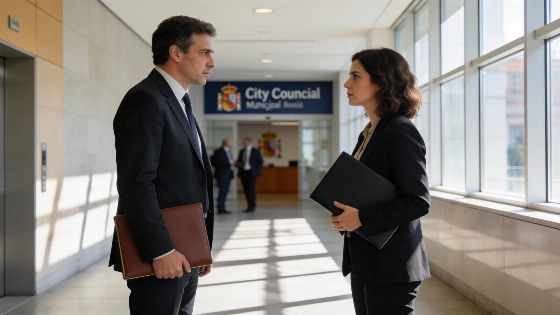
PSOE is facing internal conflict as it prepares for the 2027 municipal elections in Madrid. Cancelled primaries, unexpected candidate choices, and public disagreements in cities like Alcalá de Henares, Leganés, and Móstoles are testing the party's unity.
PSOE's preparations for the 2027 municipal elections in Madrid are already marked by internal conflict in several of the region's most influential cities. The recent removal of Enma López from the leadership of the Madrid City Council group, following her defeat to Reyes Maroto in the primaries, has become a clear sign of the party's internal tensions. In Móstoles, the decision to support Juana López Pagán—a politician from Murcia with no previous local ties—has left many party members uneasy about bringing in an outsider to challenge the current PP mayor, Manuel Bautista, who is under investigation for alleged harassment.
The regional leadership, led by Óscar López, maintains that these disputes are part of normal party life. On the ground, however, the mood is different. In Alcalá de Henares, the cancellation of primaries has led to open criticism. Local PSOE councillor Miguel Castillejo Calvo and three colleagues have publicly objected, saying party members only learned of the decision through the media. He describes the situation as discouraging, with the local group still run by a caretaker committee months after the previous secretary general resigned.
PSOE Madrid has officially launched the candidate selection process for all municipalities over 20,000 inhabitants, with primaries set to begin in September 2026.
In Leganés, two long-standing party figures will compete directly: Miguel Recuenco, the city’s PSOE secretary general, and Sara Oviedo, a current councillor. Oviedo, who lost her deputy spokesperson role last year, has accused Recuenco of breaking earlier agreements meant to unify the party ahead of the elections. The dispute has become public, exposing fragile alliances within the local organization.
Back in Móstoles, the selection of Juana López Pagán has surprised local activists and raised doubts about her ability to connect with voters. Although she has the support of local leader Alejandro Martín and a polite endorsement from former mayor Noelia Posse, some insiders question whether an external candidate can energize the city’s electorate. As one party figure put it, Móstoles is a major battleground, and bringing in a little-known outsider is a risky move.
The internal restructuring in Móstoles is also linked to the aftermath of the ITV case, which involved current councillors Noelia Posse and Álex Martín. This context has contributed to skepticism among some activists regarding the party's decision to select an 'imported' candidate from outside the city.
Elsewhere, Coslada is preparing for its own leadership transition, with primaries scheduled for September. Candidates have until the 7th to register, followed by a short campaign and a first-round vote on the 26th. If needed, a second round will take place in early October. The result will decide who leads the party’s challenge in a city where PSOE wants to improve on its previous results.
Pilar Sánchez Acera, the party’s regional organisation secretary, insists that PSOE is united and focused on offering new projects to Madrid’s citizens. But the evidence suggests a party struggling to keep itself together. The regional leadership’s decision to skip primaries in Alcalá de Henares, citing unresolved issues and the need for a caretaker committee, has only deepened frustration among local members. Officially, only Alcalá will skip primaries, with all other municipalities over 20,000 inhabitants proceeding as planned. Still, the lack of transparency and the top-down approach have left many activists dissatisfied.
These internal disputes come as PSOE tries to regain ground lost to Isabel Díaz Ayuso’s PP, which dominated the region in 2023. The party’s goal is to challenge the PP’s hold on Madrid’s largest municipalities. But the current infighting and controversial candidate choices threaten that aim. As reported earlier, the political climate in Madrid remains tense, with high-profile decisions and internal disagreements shaping the run-up to the next elections.
PSOE’s internal struggles in Madrid are not just about personalities or local rivalries. They reflect a deeper challenge for a party trying to balance central control with grassroots participation. The cancelled primaries in Alcalá de Henares, the public fallout in Leganés, and the outsider candidacy in Móstoles all point to a leadership willing to take risks, but at the cost of alienating parts of its own base. With the municipal elections less than a year away, PSOE’s ability to present a united front is in doubt. The leadership may insist on unity, but the reality is a patchwork of unresolved disputes and uneasy alliances. Unless these fractures are resolved soon, PSOE’s chances of unseating the PP in Madrid’s key cities look uncertain.