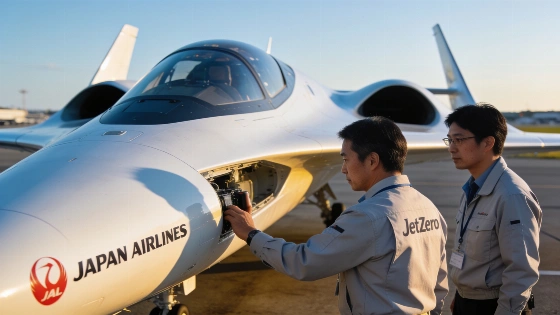
Japan Airlines is investing in JetZero's Z4, a next-generation aircraft designed to carry 250 passengers over nearly 10,000 kilometers. The project promises a dramatic reduction in fuel consumption and a bold new look for long-haul commercial aviation.
Japan Airlines has taken a decisive step toward the future of air travel by investing in JetZero's Z4 project, a commercial aircraft that breaks with decades of conventional design. The Z4, currently under development in the United States, is engineered to carry around 250 passengers and cover distances of up to 9,920 kilometers in a single flight—enough to connect Tokyo directly with the US West Coast.
What sets the Z4 apart is its blended wing body, a radical departure from the traditional tube-and-wing structure that dominates today's skies. Instead of a cylindrical fuselage with attached wings, the Z4 merges its body and wings into a single, wide aerodynamic surface. This approach allows a much larger portion of the aircraft to generate lift, reducing drag and, according to JetZero, potentially cutting fuel consumption by 30% to 50% compared to standard airliners.
Blended Wing Innovation
Most commercial jets rely on a narrow fuselage and separate wings, with the wings alone responsible for keeping the plane aloft. The Z4's integrated design means the entire structure contributes to lift, which not only improves efficiency but also opens up new possibilities for cabin layout and passenger comfort. However, Japan Airlines has yet to reveal details about the interior configuration or how the space will be used.
JetZero's estimates suggest the Z4 could revolutionize long-haul routes, making direct flights between major cities in Asia and North America more sustainable. The aircraft's projected range would allow airlines to serve intercontinental routes without stopovers, a key advantage for both passengers and operators.
Efficiency and Sustainability
Japan Airlines' involvement goes beyond financial support. The airline plans to contribute its operational expertise to the Z4's development, ensuring the aircraft meets the practical demands of commercial service. Takao Suzuki, Executive Officer of Corporate Strategy at Japan Airlines, emphasized that the partnership aligns with the company's commitment to sustainable innovation and its goal of achieving net-zero emissions by 2050.
Reducing fuel consumption is central to this vision. If the Z4 delivers on its efficiency promises, airlines could operate long-haul flights with significantly lower environmental impact, helping the industry move closer to its climate targets.
Technical Challenges Ahead
Despite its promise, the Z4 faces significant engineering hurdles. Blended wing aircraft are inherently less stable than traditional designs, requiring advanced flight control systems to ensure safety and comfort. This complexity has long been a barrier to bringing such concepts to commercial aviation, even though the idea has existed for decades.
JetZero is working to combine cutting-edge control technology with the aerodynamic benefits of its integrated structure. The Z4 stands as the company's flagship project and one of the most ambitious attempts yet to bring blended wing design to passenger transport. Japan Airlines' investment adds the weight of a major international carrier to the effort, signaling growing industry interest in radical efficiency gains.
As the Z4 moves through development, its progress will be closely watched by airlines and manufacturers worldwide. If successful, it could mark a turning point in how long-haul aircraft are designed and operated, with implications for sustainability, passenger experience, and the economics of global air travel.