The criminal probe into the management of the Dana flood in Valencia will continue for at least six more months. The court cites unresolved witness statements and forensic reports as reasons for the extension. The case now stretches into 2027.
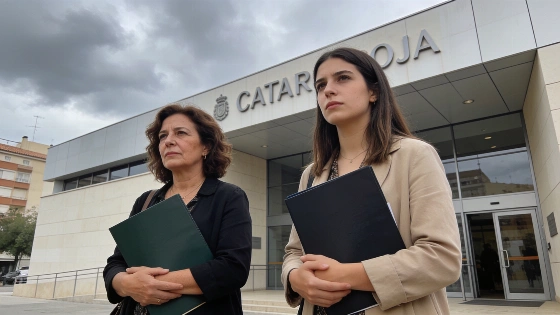
The investigation into how authorities handled the Dana flood disaster in Valencia will remain open well beyond this year. The court in Catarroja has ordered the process to continue until at least April 2027, citing the complexity of the case and the amount of unresolved evidence. The search for accountability in one of the region’s most closely watched crises is still ongoing.
Judge Nuria Ruiz Tobarra, who leads the inquiry, said the seriousness of the case and the number of pending actions make a quick resolution impossible. The court’s latest order, supported by prosecutors, points to outstanding witness and victim statements, as well as key forensic reports that are still incomplete. The original deadline was October 30, but the court now considers that date unworkable. According to EFE, investigators are also weighing whether to add up to eight more possible victims, which could raise the official death toll from 232 to 240, depending on the final forensic findings.
Judge Ruiz has already increased the official death toll to 232 after recognizing a new victim linked to an oxygen supply failure.
Costablanca FM
One of the most disputed issues is whether investigators can recover messages from José Manuel Cuenca, the former chief of staff to ex-president Carlos Mazón. So far, these communications from the day of the Dana flood have not been retrieved, but the court has not ruled out the possibility. The outcome could shape the direction of the case. As reported by Democrata and other Spanish media, the inability to access these messages remains a major obstacle for the investigation.
Beyond digital evidence, the court is still waiting for several affected people and witnesses to testify. Their statements could lead to further medical and forensic reviews, especially as the investigation considers whether more deaths should be officially linked to the disaster. The judge has not ruled out recognizing additional victims if new information comes to light. EFE notes that the final number of victims is still uncertain, as the court awaits forensic reports on eight open cases.
Not every claim has been accepted. In a recent decision, the court rejected a request to classify the death of a 93-year-old woman from La Torre as a direct result of the Dana flood. She died in November 2024 after slipping on mud in her home and later suffering a heart attack. Forensic analysis found that her death was mainly due to pre-existing severe cardiovascular and systemic conditions, not the injuries from the flood’s aftermath.
Judge Ruiz has also been critical of the defense's arguments, particularly noting that the Es-Alert emergency message was only sent at 20:11, which was considered too late and lacking in content. The court has refused to request voluntary handover of communications from Pilar Bernabé for October 29, 2024, emphasizing that Pradas and Argueso were responsible for monitoring local risks.
El Español
This extension comes as Spanish courts face pressure to clarify responsibility in high-profile cases involving public safety and government response. The Dana flood probe is not the only legal process in Spain slowed by procedural hurdles and the need for thorough evidence. As reported earlier, other major investigations have also been delayed by the scale of documentation and the challenge of securing key testimonies.
For residents of Valencia and the wider Comunitat Valenciana, the court’s decision means continued uncertainty over who, if anyone, will be held responsible for the management failures during the Dana flood. The drawn-out timeline reflects both the seriousness of the allegations and the limits of Spain’s judicial system when dealing with complex, multi-victim disasters. The court’s refusal to rush the process is meant to avoid superficial justice, but it also highlights the frustration of those still waiting for answers.