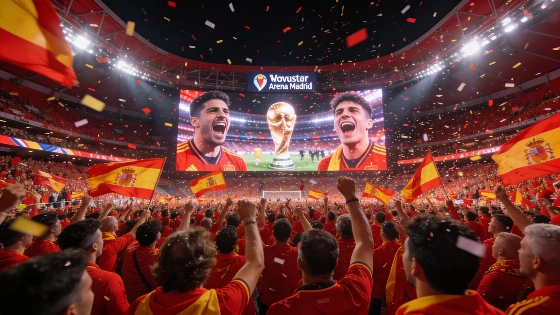
Movistar Arena in Madrid became the epicenter of celebration after Spain’s World Cup victory. Thousands gathered, filling every seat, as the city united in chants and emotion. The event highlighted a new chapter in Spanish football history.
Madrid witnessed an extraordinary night as Movistar Arena filled to capacity with 15,000 fans celebrating Spain’s dramatic World Cup victory. The national team secured the title after a tense extra time, breaking a deadlock that kept supporters on edge until the final whistle. The arena, transformed into a sea of red, echoed with chants of "Viva España, somos campeones" as supporters embraced, sang, and shed tears in a collective outpouring of joy.
The city council had prepared for the occasion by installing giant screens across Madrid, with the Movistar Arena hosting the largest and most vibrant gathering. Tickets for the event sold out within minutes, turning the venue into the focal point of national pride. Groups of young fans, such as Alejandro and Hugo’s circle of friends, claimed front-row spots, eager to witness a moment they had only heard about from older generations. For many, this was their first conscious memory of Spain lifting the trophy, marking a generational milestone.
The celebration brought together people of all ages and backgrounds. Families like Alberto and Yaiza, who attended with their three-year-old daughter, sought to create lasting memories, while older fans such as Jesús and Pilar relocated their family gathering from their living room to the arena, unable to fit everyone at home. The event’s atmosphere was marked by unity and inclusivity, with fans like Juanma, a Cuban resident of Madrid, describing the Spain-Argentina final as a "beautiful rivalry" that resonated deeply due to his personal ties.
Throughout the match, tension remained high, with the crowd’s energy unwavering from kickoff to the final whistle. Supporters like Marina and Alejandra, who had missed previous celebrations due to work commitments, led the chants from the stands, embodying the passion and resilience of the Spanish fanbase. The Movistar Arena became the heart of the city’s celebration, reflecting the significance of the victory for both long-time supporters and newcomers to the national team’s legacy.
Madrid’s celebration was mirrored by Spanish fans around the world, including those who gathered in New York ahead of the final, as reported in coverage of the vibrant scenes near Madison Square Garden. The global reach of the event underscored the unifying power of football and the enduring appeal of Spain’s national team.
Spain’s World Cup win in 2026 adds a new chapter to the country’s sporting history. The Movistar Arena event highlighted how major victories can bring together diverse communities, bridging generations and backgrounds. Such large-scale public celebrations have become a hallmark of Spanish football culture, with city authorities increasingly investing in infrastructure to accommodate mass gatherings. The success of these events demonstrates the ongoing importance of football as a source of national identity and collective memory in Spain.