Madrid’s Palacio de Cristal is closed for a three-year, €7.5 million restoration. More than 5,000 glass panels and the iron structure are being renewed. The reopening is scheduled for July 2027.
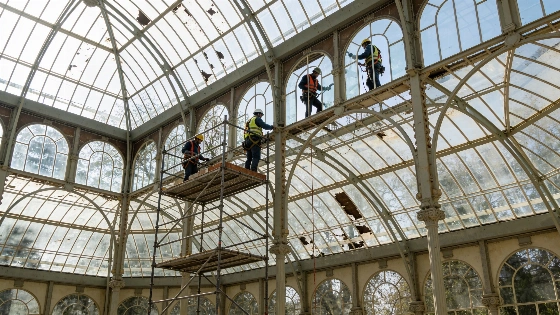
The Palacio de Cristal, a landmark of Madrid’s Retiro Park and a prime example of 19th-century iron and glass architecture, is now the focus of a major restoration project. The building, which has served as a venue for contemporary art exhibitions under the Museo Reina Sofía, is undergoing a complete overhaul after structural issues forced its closure in 2023. More than 5,000 glass panes are being replaced, and the entire iron framework is being reinforced, with scaffolding filling the 13,000 cubic meters of the historic greenhouse.
This intervention, budgeted at €7.5 million and set to last three years, aims to address both safety and preservation concerns. The project was triggered when iron pieces fell from the structure, prompting immediate action from the Reina Sofía and a technical assessment of the building’s condition. The Spanish Council of Ministers approved emergency funding in July 2024, setting a target for reopening in July 2027.
One of the key changes involves returning to square, overlapping safety glass panels, replacing the larger curved panes installed during the last restoration in 1994. The previous glass design, while visually striking, created a sealed environment that trapped condensation and made the structure vulnerable to damage from hail and movement. The new glass will allow the building to “breathe” and better withstand Madrid’s weather, including frequent hailstorms that previously required constant repairs.
Alongside the glass replacement, the restoration includes installing new ventilation windows, repairing the iron portico, restoring the flooring, and refurbishing the zinc pyramid atop the dome. Innovative techniques are being used, such as a “rodonado” system for joining metal parts, a “sponger” method for dust-free cleaning, and laser welding for window and glass components. The surrounding plane trees, while iconic, present ongoing challenges by dropping hard seed balls and large amounts of pollen that clog drains and joints.
Since the 1990s, the Palacio de Cristal has hosted site-specific installations by contemporary artists, who must adapt their work to the building’s open, weather-exposed environment. According to museum officials, the space is intentionally left open to the elements, with fluctuating temperatures and occasional visits from birds, making it a unique backdrop and tool for artistic creation.
The Palacio de Cristal, designed by Ricardo Velázquez Bosco and built in 1887 for the Exposición General de las Islas Filipinas, is protected as a Bien de Interés Cultural and forms part of the UNESCO-listed Paisaje de la Luz. Its restoration is seen as essential for preserving Madrid’s architectural heritage and ensuring the building’s continued use as a cultural venue. The project highlights the ongoing challenges of maintaining historic structures in active public use, balancing preservation with the demands of modern exhibition programming.
Madrid’s Retiro Park, where the Palacio de Cristal is located, is one of the city’s most visited green spaces and a UNESCO World Heritage site since 2021. The restoration of the Palacio is expected to reinforce its status as a cultural and architectural icon, drawing both locals and tourists once it reopens. The project also reflects broader trends in Spain, where investment in heritage conservation is increasingly prioritized to support tourism and cultural identity.