A Malian refugee lost his left eye after a police baton strike at the Melilla border. After years of legal delays, the case is back in court in Barcelona, raising questions about police accountability in Spain.
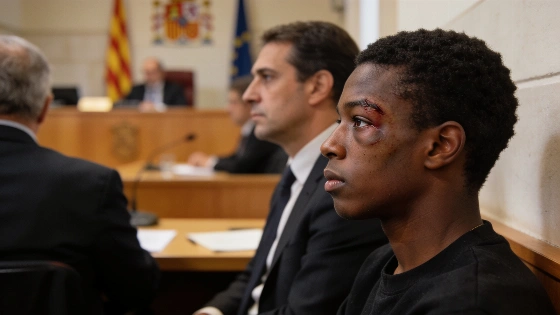
Seventeen-year-old Zakaria came to Spain looking for safety. Instead, he left the Melilla border with his left eye destroyed—a result of a direct baton blow from a Guardia Civil officer during the 2022 mass crossing. The injury left him permanently blind on one side. This week, Zakaria testified in a Barcelona court, reviving a case that had stalled for years and forcing Spain’s justice system to examine the actions of its border police.
The incident happened on March 2, 2022, when nearly 500 people tried to climb the Melilla fence, a recurring flashpoint in Spain’s migration policy. Zakaria, then a minor fleeing violence in Mali, was among those who made it across. Instead of finding protection, he was struck in the face and back by a police baton while heading toward a youth center. Despite heavy bleeding and trauma, he managed to reach help, but the damage to his eye could not be repaired.
After relocating to Barcelona in late 2022, Zakaria underwent surgery at Hospital Sant Pau to remove the contents of his injured eye, a procedure known as evisceration.
The legal process stalled for a long time, only moving forward after a formal complaint led to the reopening of the investigation in Málaga. Now, the case is in Barcelona, where Zakaria, living as a refugee, has identified both the officer involved and the chain of command that may be responsible for the use of force. The court will decide whether the violence met legal standards or crossed into abuse. According to reports from Democrata, the complaint was filed by the human rights group Irídia, alleging possible torture and serious bodily harm with a racial motive against an as-yet-unidentified Guardia Civil officer.
Spain’s handling of border incidents has faced criticism before. In other cases, such as the investigation into public safety failures in Barcelona, legal action has been used to challenge official conduct. The Melilla case stands out because of the victim’s age and the severity of his injury, raising questions about how minors and refugees are treated at Spain’s borders. Zakaria’s injuries go beyond the loss of vision: he still suffers from chronic pain, sleep problems, tearing, and itching, all of which affect his ability to work and study, as documented by medical follow-up in Barcelona.
Zakaria’s testimony is a rare example of a migrant’s voice reaching a Spanish courtroom, showing the obstacles faced by those seeking justice after police violence. The outcome of this case could affect future protocols for law enforcement at the border and influence Spain’s reputation on human rights. The fact that it took years and persistent legal pressure to bring the case back to court highlights how official misconduct can go unchecked. If Spain wants to protect vulnerable people at its borders, this case will need to deliver more than symbolic gestures. Real accountability is at stake.
In 2026, Spain's Supreme Court clarified that immediate returns at the border should not be automatic if a person has not physically crossed the barrier, requiring instead a standard administrative process. This ruling reflects ongoing debates about the legality of Spanish border enforcement practices, especially in Melilla and Ceuta.