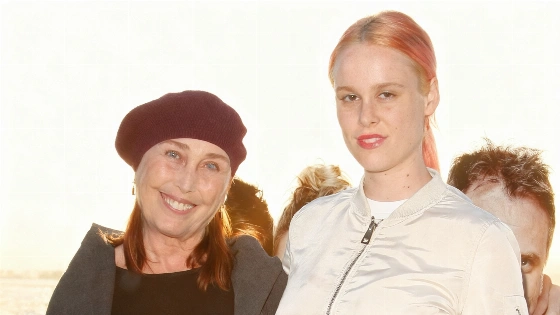
Maria Iborra Reveals Unknown Details of Verónica Forqué’s Final Days. Verónica Forqué’s daughter has spoken for the first time about her mother’s last days. María Iborra’s book brings to light unexpected details and personal reflections. The story has once again sparked discussion in the Spanish media.
Spanish show business is once again discussing one of the most painful family stories of recent years. María Iborra, the daughter of legendary actress Verónica Forqué, has decided to speak openly about her mother's final days, four years after the tragedy. Her book, "No soy Verónica Forqué," has reignited conversations about the price of fame, public pressure, and the fragility of even the brightest stars’ mental health.
A family drama in the spotlight
As noted by Divinity, it was the details that María chose to reveal to the public for the first time that truly shocked fans. In her book, she describes how in the last months of her life, Forqué was in a state that her daughter calls 'almost vegetative.' Public pressure, constant scrutiny following her appearance on a popular cooking show, and painful personal losses—all this, according to María, broke the actress. She recalls that her mother no longer enjoyed meeting fans, avoided attention, and increasingly withdrew into herself.
The final signals
A special part of the story is dedicated to the strange rituals and changes in Forqué’s behavior. María recalls that during the pandemic, her mother developed alarming habits: from compulsive shopping to eating disorders. Even small details—like buying identical items in pairs—now seem ominous to her. The situation worsened when her mother went back to work: the actress increasingly secluded herself in hotel rooms, lost interest in being in the public eye, and, according to her daughter, 'was tired of being Verónica Forqué.'
That very day
The most harrowing episode in the book is the account of the actress's final hours. Maria shares that on the day of the tragedy, her mother held a kind of "scarf casting," choosing the one that, as it turned out, would become the last accent in her story. Her daughter recalls saying goodbye without suspecting it would be their last meeting. Later, this very moment became a source of torturous questions and guilt for her, although, as Maria admits, it is pointless to look for someone to blame in such situations.
Public life and private pain
In Maria Iborra's book, there is no attempt to blame anyone directly, but she makes it clear: pressure from society and the media played their part. She describes how her mother would spend hours reading negative comments online, dwelling on others' words and gradually losing strength. Even after Forqué's death, the family was left with questions that may never be answered. According to Maria, her father still believes that things could have turned out differently if the actress had not left home.
Memory and recognition
The story of Verónica Forqué has once again sparked discussion not only in high society, but also among fans of Spanish cinema. She remains one of the most prominent and controversial figures in the industry, and her daughter's book is an attempt to preserve her mother’s memory beyond the confines of tragedy. In this sense, María Iborra’s story echoes other family confessions that in recent years have become increasingly visible in the Spanish media landscape. For example, Carlota Casiraghi recently also spoke openly about the impact of family tragedy on her life, which drew widespread attention and became the subject of separate debate in cultural circles.
The publication of María Iborra’s book is not just a personal gesture, but also an important reason to reflect again on the boundaries of publicity, the price of fame, and how even the strongest individuals can be vulnerable in the face of public pressure. The Forqué family’s story is a reminder that behind the facade of success and recognition there are often dramas of which the public only learns years later.