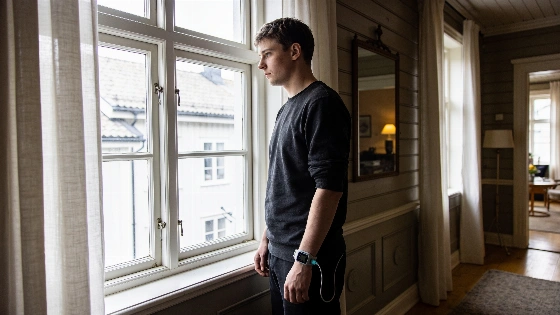
Marius Borg will stay under electronic surveillance at Skaugum, agreeing to an extended house arrest. The move is intended to avoid further controversy as Norway prepares for King Harald V’s funeral. Legal questions remain unresolved.
Marius Borg’s legal team has agreed to extend his electronic house arrest, aiming to keep his criminal case out of the spotlight in the days leading up to King Harald V’s funeral. His lawyer confirmed the decision, which comes as the royal family faces public scrutiny and emotional strain after the king’s death.
Rather than challenge the prosecution’s request for four more weeks of preventive detention, Borg’s defense chose not to pursue a public courtroom fight. The current order, which keeps him at Skaugum with electronic monitoring, was set to expire on September 7. With the extension, Borg will remain under strict supervision as the country mourns its king.
According to several reports citing Norwegian police and prosecutors, Borg will be allowed to attend the coffin procession at the Royal Chapel on August 31, in addition to the state funeral.
This legal step is not an admission of guilt or agreement with the prosecution’s arguments. Borg denies any risk of reoffending, and his lawyer, Petar Sekulic, has said the decision is procedural. The goal is to keep Borg’s legal issues from distracting the public during a period of national mourning.
Authorities have granted Borg special permissions recently. He was allowed to leave Skaugum to visit King Harald V at Oslo’s Rikshospitalet before the king’s death on August 28. On August 31, Borg received another permit to take part in the transfer of the king’s coffin at the Royal Palace, joining close family members in a visible role despite not holding a formal position in the monarchy.
Borg’s presence at these ceremonies has drawn attention, partly because he is part of Queen Mette-Marit’s immediate family but holds no official status and is not in the line of succession. Still, the family’s public gestures—such as a wreath marked "Takk" from Haakon, Mette-Marit, Ingrid Alexandra, Sverre Magnus, and Marius—show his personal connection to the late king.
Official statements confirm that Borg’s electronic monitoring at Skaugum is a preventive measure and does not count toward serving his four-year sentence, as his conviction from June 2026 remains under appeal. This distinction has been highlighted by several legal commentators and Norwegian media, emphasizing that his current status is remand, not imprisonment.
Borg’s legal situation is still unresolved. In June, the Oslo District Court sentenced him to four years in prison for 34 offenses, including two counts of rape and domestic abuse. He has appealed the verdict and maintains his innocence on the most serious charges. The appeal is ongoing, and his future remains uncertain, even as he is allowed to attend the state funeral on September 9 at Oslo Cathedral.
Norwegian prosecutors argue that the risk of reoffending justifies continued electronic monitoring. The defense has chosen not to escalate the conflict at this sensitive time. This approach is similar to recent legal strategies in other European cases where high-profile trials overlap with public events—such as the court’s rebuke of Spain’s sentencing of Catalan protesters—forcing authorities to balance legal process with public sentiment.
Allowing Borg to take part in the royal funeral, despite his ongoing legal battle, highlights the challenge of managing justice and tradition in a modern monarchy. Norwegian authorities have granted temporary freedoms while keeping strict controls, aiming to avoid scandal during a period of national grief. This situation shows how personal crises can threaten to disrupt state rituals and raises questions about the line between private conduct and public duty in royal circles. The decision to extend Borg’s house arrest is less about legal principle than about protecting the monarchy’s image at a time when unity and dignity are under pressure.