Nico Williams overcame a serious injury to play a key role in Spain’s World Cup final win over Argentina. His late assist for Ferran Torres sealed the title. The journey included months of physical setbacks and uncertainty.
Nico Williams delivered one of the defining moments of Spain’s World Cup campaign, providing the crucial assist that secured victory over Argentina in the final. His performance in New York came after a season marked by persistent injuries and doubts about his fitness, making his impact all the more significant for the national team.
Williams’ path to the final was anything but straightforward. After suffering a heavy challenge from Canobbio in the closing moments against Uruguay, he feared his tournament was over. The initial shock and pain left him convinced he would not play again in the World Cup. However, medical tests revealed that his right adductor was not torn, only strained, allowing him to begin a gradual recovery.
His return to the pitch came in the quarterfinal against Belgium, where he was eased back into action. The semifinal against France saw him gain more minutes, but it was the final against Argentina where Williams truly made his mark. Entering the match in the 75th minute, with extra time looming, coach De la Fuente placed his trust in Williams at a critical juncture.
On the field, Williams was relentless. He pressed from the first touch, recovered possession deep in his own half, and repeatedly threatened the Argentine defense. Twice he came close to scoring, first with a powerful shot and then with a header, both denied by Dibu Martínez. The breakthrough arrived in the 106th minute: after a cross from Porro, Williams managed to keep the play alive and delivered a deft header across goal, setting up Ferran Torres for the decisive finish.
Statistically, Williams’ influence was clear. Despite not starting, he ranked second in total shots (three), tied for first in shots on target (two), third in crosses (five), and second in chances created (two). He also completed 21 of 22 passes, underlining his efficiency and composure under pressure.
Williams’ journey to the final was shaped by a difficult season at Athletic, where he missed 107 days due to various injuries, including groin and muscle problems. The setback against Uruguay threatened to end his World Cup, but support from De la Fuente and the medical team proved decisive in his recovery. His resilience was on full display in the final, where his energy and determination changed the course of the match.
After the final whistle, Williams celebrated with his family in the stands, a moment that highlighted the personal cost of his long road back to fitness. His mother, present in the crowd, shared in the emotional release after months of uncertainty and frustration.
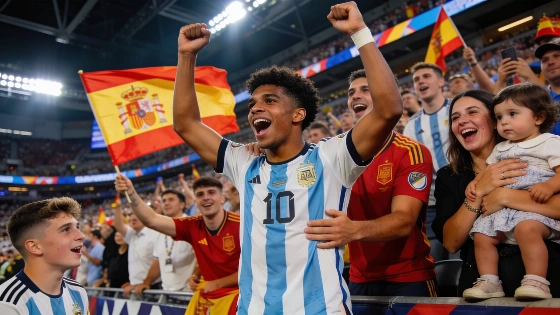
The World Cup final in New York drew massive attention, with Spanish fans filling the area around Madison Square Garden and turning the city’s landmarks into a sea of red and yellow. The atmosphere and anticipation were captured in reports such as coverage of the Spanish supporters’ celebrations in Manhattan, reflecting the scale of the occasion for both players and fans.
Williams’ story is a reminder of the unpredictable nature of elite sport, where setbacks can quickly turn into triumphs. His decisive contribution in the final not only secured Spain’s title but also marked a personal comeback after a year defined by adversity. The scenes in New York, both on and off the pitch, will be remembered as a testament to resilience and the enduring appeal of football at the highest level.