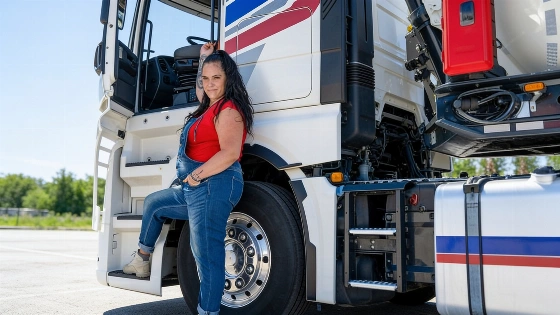
Rosa swapped her factory job for the cab of a truck and discovered that night driving not only boosted her income but also let her be present for her daughter. Her story reveals the realities and rewards of Spain’s demanding transport sector.
Rosa parks her truck at eight in the morning. Her shift ends, but her day is just starting. For years, she worked in a textile factory. The pay was about 1,100 euros a month. She missed out on her daughter’s childhood. That changed when she switched to night trucking. Now she earns between 1,700 and 2,300 euros. Her schedule finally fits her family.
Driving trucks in Spain is tough. The Dirección General de Tráfico (DGT) counts 193 deaths each year in truck accidents on city roads. Most—85%—happen on weekdays. The risks are real. The hours are long. In her early days, Rosa spent two weeks at a time away from home. She crossed Europe with a colleague. She missed birthdays and school events for her seven-year-old daughter.
Women make up only about 2% of professional truck drivers in Spain, according to the Ministry of Transport and Sustainable Mobility.
The night shift changed her life. Rosa starts work at 11 p.m. She finishes around sunrise. This lets her take her daughter to school. She can be there for the moments that count. If something comes up at home, her boss lets her shift her hours. She never had that kind of flexibility in the factory.
"The hardest job is being a mother," Rosa says. "But I want to be there and give her the best." The truck cab is her space. She listens to music, catches up on podcasts, or calls friends. It’s quiet. It’s nothing like the noise and stress of her old job. "I’m happy because I can do things my way," she says.
The factory was tense and loud. Trucking feels different. Rosa says she hasn’t faced negative treatment as a woman. At loading docks, staff often show her extra courtesy. Sometimes they unload her truck first. "If you’re afraid, that’s when you need to push through," she says. Pay depends on how you handle your work, your time, and your truck. Gender doesn’t decide your paycheck.
Industry reports for 2026 highlight that operating costs for Spanish road carriers have risen sharply, with fuel prices up 14.4% year-on-year and total annual expenses for a heavy truck reaching over 170,000 euros. Despite these pressures, the volume of road freight transport grew by 9.4% in the second quarter, and international shipments increased by 10.7%.
Her story fits into a bigger picture. In Spain’s cities, transport and work hours shape family life. As reported earlier, changes to daily routines can leave a mark on families and neighborhoods.
Rosa’s path is unusual. She turned a tough job into a way to live on her own terms. The DGT numbers show trucking is risky. But for Rosa, the gains—money and time with her daughter—are worth it. Her story proves something simple. With support and a bit of flexibility, even hard jobs can open new doors for working parents in Spain.