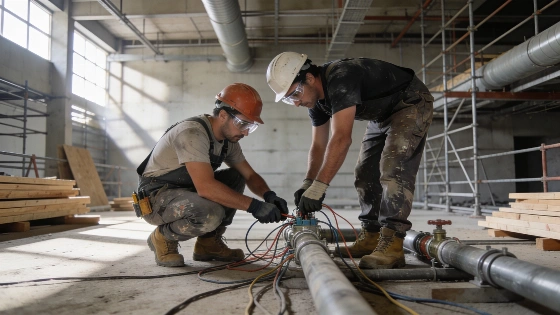
Jensen Huang, CEO of Nvidia, says hundreds of thousands of skilled tradespeople will be needed to build the infrastructure for artificial intelligence. As Spain already faces shortages in these professions, the surge in data centre construction is set to intensify competition for qualified workers.
When Jensen Huang, founder and CEO of Nvidia, declared that “hundreds of thousands” of electricians, plumbers and carpenters will be needed to build the next wave of data centres, he put a spotlight on a growing labour crisis. Speaking to Channel 4 News on 18 September 2025, Huang described the scale of construction required to support artificial intelligence as unprecedented—and warned that the world’s supply of skilled trades is already stretched thin.
Huang’s comments come as global investment in data centre infrastructure accelerates, with companies like Nvidia and OpenAI announcing plans for massive new facilities. The term “AI factories,” as Huang calls them, refers to the sprawling complexes that house the processors and systems powering machine learning and generative AI. These projects demand not only advanced technology, but also a vast workforce of tradespeople to handle electrical systems, plumbing, carpentry, cooling, security, and ongoing maintenance.
Skilled Trades at the Heart of AI Expansion
“If you’re an electrician, plumber or carpenter, we’re going to need hundreds of thousands to build all these factories,” Huang said. While he did not specify hiring targets for any single company or country, his forecast points to a global surge in demand for technical trades as the digital economy expands. The construction phase of a large data centre can require up to 1,500 workers, according to McKinsey, with the majority of jobs concentrated before the facility becomes operational.
Once completed, data centres typically employ smaller teams—often 50 or more staff—focused on operations, security, and technical support. However, the initial build-out creates a wave of employment for electricians, machinery operators, HVAC technicians, welders, and construction specialists. In the US, McKinsey notes that many of these roles can command annual earnings above $100,000, especially with overtime, though Spanish salaries remain lower and depend on local agreements and qualifications.
Spain’s Labour Shortage Intensifies
Spain is already feeling the strain. The latest report from the SEPE’s Occupations Observatory found that, in the final quarter of 2025, there were 95,340 job vacancies in construction, with nearly half remaining unfilled for over 90 days. Electricians, plumbers, and construction technicians are among the hardest roles to fill, and the number of hard-to-cover positions in the sector has jumped by more than 70% since early 2023. The shortage is driven by a lack of candidates, insufficient technical skills, and an ageing workforce—over 55% of workers in several trades are now older than 45.
As the demand for data centres grows, Spain is seeing major projects that could generate thousands of jobs. For example, the construction of eleven new data centres in Aragón is projected to create an average of 21,000 direct jobs between 2026 and 2029, though actual numbers will depend on project timelines and regulatory approvals.
Investment Surges, but Jobs Remain Elusive
The scale of investment is staggering. In September 2025, Nvidia and OpenAI announced a letter of intent to deploy at least ten gigawatts of Nvidia systems, with a potential phased investment of up to $100 billion. This was followed by OpenAI’s February 2026 funding round, raising $110 billion, including $30 billion from Nvidia. The Stargate project, involving OpenAI, SoftBank, Oracle and others, aims to invest $500 billion over four years in US infrastructure alone.
Yet, these sums do not translate directly into permanent jobs. Most employment is concentrated during construction, with ongoing operations requiring far fewer staff. The availability of energy, water, permits, and grid capacity also shapes how many roles are created and where.
Skilled Trades Gain New Value
Huang’s forecast highlights a global trend: as AI infrastructure expands, skilled trades are becoming more valuable—and harder to find. In Spain, the SEPE’s data confirms that companies are already struggling to recruit electricians, plumbers, and other technical professionals. For those considering a career in these fields, opportunities are emerging not only in construction, but also in industrial maintenance, renewable energy, and electrical installations.
While the scale of job creation in Spain may not reach “hundreds of thousands” solely from data centre projects, the international trend is clear. The competition for qualified tradespeople is set to intensify, and the ability to attract and train new talent will be critical for both the tech sector and the broader economy.
As large-scale developments reshape local economies, the impact can be seen in other sectors as well. For instance, the expansion of Madrid Sur shopping centre in Vallecas, which has nearly tripled its retail space ahead of its 2026 opening, demonstrates how major construction projects can transform employment landscapes and drive demand for skilled workers across industries. The transformation of Madrid Sur is just one example of how infrastructure investment is reshaping Spain’s job market.