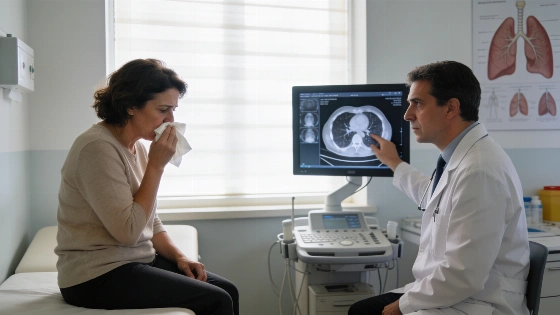
Spanish pulmonologists urge people with a lingering cough or excess phlegm to seek medical advice. Bronchiectasis is often diagnosed late, but early detection can prevent serious complications.
In Spain, many people live for years with a stubborn cough and constant phlegm, brushing off these symptoms as minor or routine. For some, though, these are early signs of bronchiectasis—a chronic lung disease that often goes unnoticed until the damage is permanent.
The Sociedad Española de Neumología y Cirugía Torácica (SEPAR) warns that too many people get used to ongoing respiratory problems, mistaking them for asthma, chronic bronchitis, or the effects of smoking. This habit leads to an average delay of more than six years before diagnosis, leaving patients at risk for repeated infections and worsening lung function. SEPAR estimates that bronchiectasis affects about 3.6% of people in Spain, with underdiagnosis especially common in certain groups. The problem reflects a wider concern about chronic respiratory diseases in the country.
Recent data from the EMBARC registry show that previous exacerbations of bronchiectasis significantly increase the risk of future flare-ups, highlighting the importance of early detection and close monitoring.
EMBARC registry, 2026
Bronchiectasis develops when the bronchial tubes become permanently widened and damaged, making it harder for the lungs to clear mucus. This allows infections and inflammation to take hold. Typical symptoms include a persistent cough, daily phlegm, frequent chest infections needing antibiotics, breathlessness, and tiredness. In severe cases, people may cough up blood or feel chest pain.
Standard chest X-rays often miss the disease in its early stages. Only a high-resolution CT scan can confirm the diagnosis, but this step is often skipped in primary care. SEPAR and Spanish screening guidelines recommend low-dose CT scans to spot hidden lung problems, since regular X-rays may not be enough to catch the disease early.
Recent studies estimate there are 227 cases per 100,000 men and 309 per 100,000 women in Spain, with rates rising to about 1,100 per 100,000 among people over 80. The cause is unknown in up to 90% of cases, though past respiratory infections are a known trigger for some. SEPAR stresses that because bronchiectasis is chronic and irreversible, early diagnosis is vital. If the disease is found late, repeated infections and loss of lung function are much harder to control.
In September 2026, SEPAR was a prominent voice in Spanish media, not only on bronchiectasis but also on COPD and asthma, underscoring the widespread issue of underdiagnosis in chronic lung diseases. For example, about 78% of COPD cases and between 20–70% of asthma cases in Spain remain undiagnosed, according to SEPAR.
SEPAR
SEPAR has launched the Año SEPAR de la Vía Aérea 2026-2027, a national campaign focused on asthma, COPD, and bronchiectasis. The goal is to raise awareness, encourage earlier doctor visits, and improve coordination between primary care and lung specialists. These three diseases often overlap, making diagnosis and treatment more complicated. SEPAR calls for an integrated approach to improve patients' quality of life. This matches the wider European focus on respiratory health, as seen at the 2026 ERS Congress in Barcelona, where the "Healthy Lungs for Life" campaign promoted lung function testing and public education.
Delays in diagnosis are not limited to bronchiectasis. As reported earlier, problems in Spain's healthcare system have led to postponed care and missed chances for timely treatment in other serious conditions as well.
For anyone with ongoing respiratory symptoms—especially a chronic cough, daily phlegm, or repeated infections—SEPAR's advice is clear: do not ignore these signs. Early medical evaluation is essential, not just to diagnose bronchiectasis but to prevent the complications that come with untreated disease. In Spain, where lung illnesses are often underestimated, the real danger is in waiting too long. The evidence shows that acting early can make the difference between manageable symptoms and lasting lung damage.
Bronchiectasis is still underrecognized, but the tools for early diagnosis and treatment exist. The challenge is making sure both patients and doctors act before it's too late for effective care.