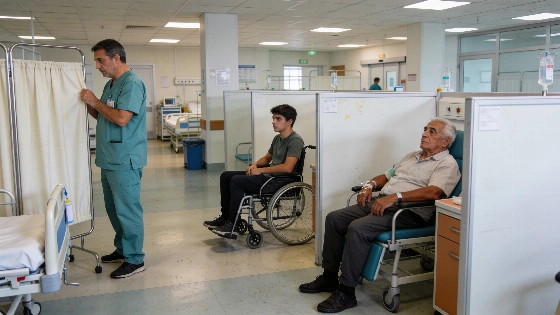
Leaked documents show that Ramón y Cajal Hospital in Madrid lowered patient priority without consulting surgeons to meet productivity quotas. The move delayed urgent surgeries for dozens and led to internal disciplinary action.
At Ramón y Cajal, one of Madrid’s largest public hospitals, the system quietly downgraded dozens of patients’ surgical priority without their doctors’ knowledge or approval. Leaked documents and accounts from affected surgeons indicate the changes were made to help the hospital meet regional productivity targets.
This was no simple paperwork mistake. Between late February and mid-March last year, 57 patients in the Orthopedic and Traumatology department were moved from “priority” status, which requires surgery within 90 days, to “normal,” which allows up to 180 days. The changes went into the hospital’s IT system, bypassing the surgeons who had originally assessed the cases. Four doctors said no new medical evaluations took place before the downgrades.
Information from a September 2026 industry report, Hospital Ramón y Cajal had an average wait time of 72.15 days for specialist consultations, one of the highest among Madrid's major hospitals.
Pressure from Madrid’s regional health authority drove the change. If patients are not operated on within the set timeframe, hospital management faces scrutiny and possible financial penalties. The 2025 contract program at Ramón y Cajal ties department head bonuses to these metrics, with productivity supplements reaching up to 3,579 euros. The incentive to “clean up” the waiting list was clear, and the evidence shows the hospital acted on it.
One surgeon, Luis Alberto Martos, discovered the changes after a colleague noticed that a three-year-old patient’s status had been downgraded from urgent to normal. The child’s case was so severe that international consultation had been sought, and the delay risked permanent disability. The parents were never told about the change. Martos raised the issue with hospital management but received no real response. Weeks later, the same managers he had accused launched a disciplinary investigation against him.
Madrid's regional authorities have publicly claimed that their community boasts some of the best surgical wait times in Spain. As of September 2026, the regional president stated that the average wait for surgery in Madrid was 47 days, compared to 121 days nationwide, with even shorter waits for oncology and cardiac surgery.
Internal records reviewed by EL PAÍS attribute the changes in notes to the department head, Basilio José de la Torre Escuredo, and the hospital’s medical director, Rafael Martínez Fernández. The notes refer to direct orders to alter patient priority, with no clinical justification mentioned. When a surgeon challenged the department head by email, he admitted the changes and cited the need to meet efficiency commitments with the regional health authority. He also advised doctors to avoid marking patients as “priority” unless absolutely necessary, suggesting the system could be manipulated to evade oversight.
Patients felt the consequences. Some spent months longer in pain, with conditions ranging from spinal problems to severe joint dislocations. Many were elderly and unlikely to notice the change in their digital records or challenge the decision. Few protested. One doctor described how a patient learned of her downgraded status only after administrative staff called her. The doctor urged her to file a formal complaint, emphasizing that the original “priority” label was medically justified.
The hospital’s official response has been to deny any wrongdoing. A spokesperson insisted that only clinical criteria determine patient priority and that neither the medical director nor management directly alters waiting lists. Internal documents and testimonies, but, point to a different reality, where administrative targets override medical judgment.
Manipulating surgical waiting lists is not new in Spain. In 2005, Madrid was excluded from national waiting list statistics for a decade after it emerged that delays were counted from the anesthesiologist’s visit, not the date of surgical prescription. The current case at Ramón y Cajal, but, directly affected patient care by extending waits for those most in need.
Martos, a veteran surgeon, has become isolated among colleagues. His efforts to hold management accountable have brought further disciplinary proceedings, with accusations of “internal conflict and harassment” now pending. The doctor who operated on the three-year-old has also filed a complaint with the medical association’s ethics committee, which remains under review.
Despite the hospital’s denials, the numbers are clear. As of February 2025, the traumatology department at Ramón y Cajal ranked among the worst in Madrid, with average waits rising from 77.5 to 98.6 days. Public data does not show how many patients have exceeded the legal maximum wait, obscuring the true scale of the problem.
Some dismiss waiting list manipulation as a bureaucratic game, but it causes real harm to vulnerable patients. As noted in a previous investigation, institutional priorities can overshadow the needs of those most at risk. The Ramón y Cajal case shows how administrative convenience and financial incentives can override clinical necessity. The silence around whistleblowers such as Martos is a warning: when hospitals treat patients as numbers, public trust suffers, while staff who speak out often pay the price.