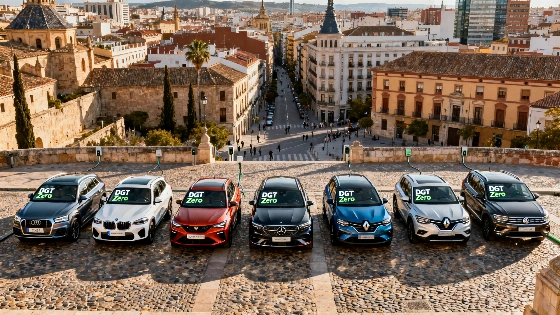
Seven plug-in hybrid SUVs, all with the coveted DGT Zero label, are put to the test. We compare their real-world range, driving experience and costs to help you decide which model best fits your needs and budget.
Choosing a plug-in hybrid SUV in Spain is no longer just about following a trend—it's a practical decision shaped by new incentives, urban restrictions and the desire for flexibility between electric and combustion power. With the DGT Zero label opening doors to city centers and tax benefits, the market now offers a wide spectrum of PHEV SUVs, from mainstream to premium. Here, seven contenders are put under the microscope: Audi Q5, BMW X1, Cupra Formentor, Mercedes GLC, Opel Grandland, Renault Rafale and Volkswagen Tiguan.
What Sets Plug-in Hybrid SUVs Apart?
Plug-in hybrids (PHEVs) offer a middle ground for drivers hesitant to go fully electric. They promise electric-only driving for daily commutes, while a combustion engine eliminates range anxiety on longer trips. Spanish buyers can also benefit from the Plan Auto+ scheme, which provides up to €2,250 off select PHEVs assembled in Europe and priced between €35,000 and €45,000.
But beyond incentives, the real question is how these SUVs perform in everyday use: their true electric range, fuel consumption with an empty battery, driving comfort, and overall value for money.
Audi Q5: Power Meets Practicality
The Audi Q5 PHEV combines a 2.0-liter turbo petrol engine (252 hp) with a 143 hp electric motor, delivering a total of 299 hp and quattro all-wheel drive. The mechanical link between the axles ensures responsive handling, and transitions between electric and petrol power are seamless. In real-world tests, the Q5 averaged 8.7 l/100 km with an empty battery and managed 75 km of electric range at 6°C—squarely in the segment average.
Despite its 2.2-ton weight, the Q5 feels agile and intuitive, aided by progressive steering. However, cold weather sometimes prevented pure electric starts, likely due to battery temperature. Interior quality, while generally solid, falls short of Audi's usual standards, with noticeable hard plastics and rough welds under the hood—surprising at a base price of €68,260.
Overall, the Q5 delivers strong performance and a well-connected driving experience, but its finish could be more refined for the price.
BMW X1: Compact, Efficient, Engaging
The BMW X1 xDrive30e stands out for its 326 hp output and 0-100 km/h sprint in 5.6 seconds, thanks to all-wheel drive. Under the hood is a modest 1.5-liter three-cylinder engine, but the driving experience is anything but dull. The transition between combustion and electric modes is nearly imperceptible, and the car feels lively even in pure electric mode, which can be selected via the menu.
Real-world electric range reached 55 km at just 1°C, and the total cost per kilometer is competitive at €0.66. The X1's rear seat space is limited, and the infotainment system has a learning curve, but ride comfort and suspension performance are excellent. Maintenance costs are relatively low, though the electric range could be better.
Cupra Formentor: Sporty Style, Fast Charging
The Cupra Formentor PHEV strikes a balance between urban agility and long-distance comfort. Its compact size makes city driving manageable, while the interior comfortably seats four. The 1.5 TSI engine (177 hp) powers the front wheels via a 6-speed DSG, and the hybrid system delivers quick, responsive acceleration. However, the sporty suspension can feel stiff, and the 345-liter boot is on the small side.
One standout feature is its fast-charging capability—up to 50 kW DC and 11 kW AC—though charging speeds drop in cold weather. In tests, the Formentor consumed 4.6 l/100 km of petrol and 12.7 kWh/100 km of electricity, with a real electric range of 71 km. Depreciation is higher than rivals, pushing the cost per kilometer to €0.73, just below premium models.
For those seeking dynamic performance and rapid charging, the Formentor is a compelling choice, though practicality takes a slight hit.
Mercedes GLC: Diesel Hybrid, Exceptional Range
The Mercedes GLC 300 de is unique in this group for pairing a diesel engine with an electric motor, resulting in a technically complex but highly capable SUV. With 333 hp and a 0-100 km/h time of 6.4 seconds, it delivers premium performance and comfort, aided by optional air suspension and four-wheel steering.
Despite its hefty 2.4-ton weight and nearly €70,000 price tag, the GLC impresses with a real-world electric range of 106 km (from a 25 kWh battery) and a combined range approaching 900 km. Diesel consumption sits at around 7 l/100 km with an empty battery. Fast charging is available up to 60 kW DC, allowing a 10-80% top-up in just 29 minutes.
The GLC excels as a single-car solution for those who can afford it, offering comfort, space and unmatched range in both electric and hybrid modes.
Opel Grandland: Everyday Value
The Opel Grandland Plug-in Hybrid is the most affordable in this comparison, starting at €40,250. It offers generous space, with a 2.78-meter wheelbase and up to 1,645 liters of boot capacity. The hybrid system combines a 1.6-liter four-cylinder petrol (150 hp) with a 125 hp electric motor, delivering 195 hp to the front wheels. Acceleration is brisk (0-100 km/h in 7.8 seconds), and the ride is comfortable thanks to adaptive dampers.
However, the real-world electric range is limited to 57 km—well below the WLTP promise of 82 km—and standard charging is slow at 3.7 kW (7.4 kW is a paid upgrade). The Grandland is quiet and agile in electric mode, but the petrol engine becomes noisy at high revs. At €0.62 per kilometer, it is the most economical option for daily use, though its electric range and charging speed lag behind rivals.
Renault Rafale: Tech-Forward, Distinctive
The Renault Rafale Hyper Hybrid lives up to its name with a complex powertrain: a three-cylinder turbo petrol engine and two electric motors, providing 300 hp and electric all-wheel drive. It always starts in electric mode, achieving 66 km of real-world range, but lacks DC fast charging.
Performance is strong (0-100 km/h in 6.4 seconds), but the driving experience is less sporty than the numbers suggest. In city traffic, the three-cylinder engine can be noisy and vibrate, and the multi-mode transmission is sometimes unpredictable. On the highway, the ride is calmer, though cabin insulation is not class-leading.
The Rafale's Google-based infotainment system is a highlight, and four-wheel steering makes it agile for its size. Consumption is competitive at 4.0 l/100 km plus 12.4 kWh/100 km. For tech enthusiasts, the Rafale offers advanced connectivity and a unique driving feel, though refinement could be improved.
Volkswagen Tiguan: Balanced and Versatile
The Volkswagen Tiguan PHEV takes a conservative approach, focusing on broad appeal. Its 204 hp hybrid system delivers smooth, refined power, and the large 19.8 kWh battery enables nearly 80 km of electric driving—among the best in this group. The Tiguan also supports DC fast charging up to 40 kW, reducing downtime on longer trips.
Inside, the Tiguan is spacious and practical, with comfortable seating and a large, high-resolution central display for infotainment and navigation. The cost per kilometer is €0.64, making it one of the most cost-effective options alongside the Opel Grandland.
For buyers seeking a functional, comfortable and efficient SUV with strong electric range and charging flexibility, the Tiguan remains a top contender.
Choosing the Right PHEV SUV
Each of these seven plug-in hybrid SUVs brings a distinct set of strengths and compromises. Premium models like the Mercedes GLC and Audi Q5 offer luxury and range at a higher price, while the Opel Grandland and Volkswagen Tiguan deliver strong value and practicality. The Cupra Formentor and Renault Rafale stand out for their design and technology, though each has its quirks.
As Spain continues to incentivize electrification and cities tighten emissions rules, the PHEV SUV segment is likely to remain a key battleground for both mainstream and premium brands. For buyers, the choice comes down to balancing range, comfort, charging speed and total cost—factors that are now more transparent than ever.