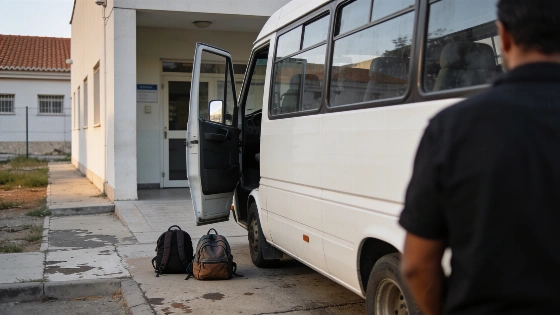
Castilla y León, Aragón and Extremadura are receiving minors from Ceuta despite pledges by their PP and Vox governments to reject further arrivals. The transfers continue under Spain’s immigration law.
Castilla y León, Aragón and Extremadura are receiving unaccompanied foreign minors transferred from Ceuta despite agreements signed by their PP and Vox governments to reject further arrivals. The transfers are being carried out under Article 5 of Spain’s immigration law, following requests from Ceuta’s administration. According to EL PAÍS, the children currently being moved entered the city before the mass crossing on 30 and 31 July.
Spain’s redistribution mechanism is based on Royal Decree-Law 2/2025, which was approved by Congress and provides the legal basis for moving unaccompanied minors between autonomous communities.
The figures show why the mechanism is under pressure. Ceuta is assigned 29 ordinary places for the care of minors. Its administration now has around 2,200 minors registered in its system, while the central government estimates that another 1,000 remain on the streets. Before the mass arrival, the city was already caring for about 700.
The September schedule shows how the process is unfolding. Ceuta transferred one minor to Castilla y León on 14 September, another to Extremadura on 15 September and one to Aragón on 16 September. On 17 September, it sent up to 14 children and teenagers to Castilla-La Mancha.
The Minister of Territorial Policy, Ángel Víctor Torres, said that the first individual case files began to be processed on 15 September. The Government estimated that relocating the minors could take roughly two months if resistance from the autonomous communities continued.
Congress changed the legal framework in March 2025. In August, the Government approved a royal decree setting the number of places assigned to each autonomous community. When a territory exceeds its allocation by three times, it can request a migration contingency, after which the other communities must accept the relocation of minors.
Ceuta is processing both groups: those who arrived before the crisis and those who crossed during the mass entry. Some transfers can also take place through voluntary bilateral agreements, as happened with five girls relocated to Navarra last week. Those girls had arrived during the mass crossing.
PP leaders and Vox sources have privately acknowledged that they must comply with the law, even as their governments challenge the rules in court without success. Génova and Juan Jesús Vivas instead argue that everyone who arrived during the 30 and 31 July crossing should be returned to Morocco. Juan Manuel Moreno has taken a different line from the national party leadership, saying that the Government has the legal power to impose transfers to the mainland. On 16 September, Congress rejected a Vox initiative calling for implementation of an agreement to return minors to Morocco, although the PP voted in favour.
The practical result is already visible: public agreements may reject new arrivals, but they do not prevent legally processed relocations from Ceuta. Article 5 has turned the dispute into an operational reality for regional governments. The unresolved question is whether the same procedure will be applied to minors who arrived during the mass crossing. Official statements reported by Moncloa describe the transfers as urgent because Ceuta’s reception system is severely overloaded. On the available evidence, the law is moving faster than the political slogans.