The Partido Popular has sharply criticized Pedro Sánchez's latest political assessment, calling it disconnected from reality. While Feijóo visits Peru for Keiko Fujimori's inauguration, PP leaders intensify their rhetoric ahead of Spain's next general elections.
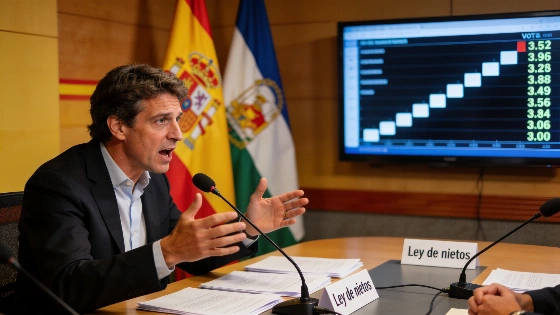
Spain's Partido Popular (PP) escalated its confrontation with Prime Minister Pedro Sánchez on Tuesday, denouncing what it described as his 'insulting triumphalism' during a political review at La Moncloa. The party's secretary general, Miguel Tellado, accused Sánchez of being out of touch and surrounded by 'lies, privileges, and corruption,' reflecting a deepening rift as the country approaches its next general elections.
With PP leader Alberto Núñez Feijóo currently in Lima for the inauguration of Peru's new president, Keiko Fujimori, Tellado took the lead in responding to Sánchez's remarks. In a video distributed to the media, Tellado argued that Sánchez's government is increasingly isolated both in parliament and on the streets, and faces mounting legal scrutiny. He insisted that the public is less interested in government self-assessments and more concerned about unresolved corruption allegations.
The PP framed Sánchez's latest appearance as potentially his last end-of-term review at La Moncloa, positioning Feijóo as the likely successor. Tellado dismissed the government's climate change agreements as secondary, instead highlighting the work of PP-led regional and local administrations, which he said are focused on overcoming current emergencies and supporting affected communities. Despite ongoing public appeals from Sánchez for a united response to climate emergencies, the PP has so far avoided directly rejecting state cooperation offers, even as wildfires and environmental crises remain a pressing issue. For context, recent emergencies such as the wildfires in central Spain have already forced evacuations and disrupted daily life, as reported in coverage of the Madrid and Ávila regions.
Feijóo's presence in Peru underscores his ongoing efforts to strengthen international ties, particularly with conservative leaders in Latin America. This marks his second visit to Lima, where he is sharing the stage with figures like Chile's José Antonio Kast and Argentina's Javier Milei, both known for their close alignment with Vox leader Santiago Abascal. According to PP officials, these international engagements reflect the party's commitment to democracy and to reinforcing Spain's relationships with Ibero-American democracies.
Within Spain, the PP continues to emphasize its role as a national opposition force, promising a 'national reconstruction' if Feijóo is elected. The party's leadership maintains that the country is in a countdown to change, with the next general elections expected next year. As the political climate intensifies, the PP's strategy centers on presenting itself as a credible alternative to Sánchez's administration, focusing on governance, transparency, and closer ties with both European and Latin American partners.
Spain's political landscape remains highly polarized, with the PP and PSOE locked in a struggle over the country's direction. The outcome of the upcoming elections will likely hinge on public perceptions of government performance, the handling of corruption allegations, and the ability to address ongoing crises such as climate emergencies and economic challenges. The PP's sharpened rhetoric signals a campaign season defined by confrontation and competing visions for Spain's future.