The Oímbra wildfire exposed major coordination lapses between Xunta and local officials. Prosecutors now question administrative responsibility after 23,000 hectares burned and three firefighters were injured.
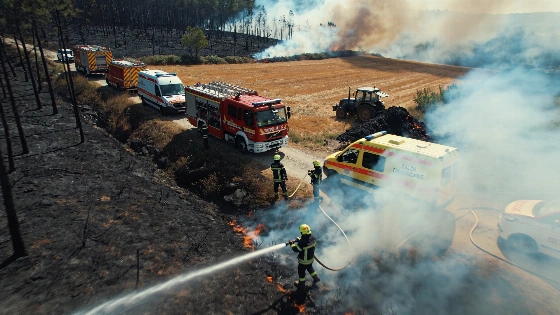
Major coordination failures between the Xunta and the Oímbra municipality have been identified as a key factor behind the devastating wildfire that swept through Ourense last August. According to the prosecutor's office, a series of mismanaged decisions and unclear directives allowed high-risk roadside clearing to continue despite extreme fire danger, ultimately sparking Galicia's second most destructive blaze on record.
The investigation centers on the events leading up to the fire, which destroyed 23,000 hectares and left three young brigade members seriously injured. The public prosecutor highlights that, even as temperatures soared and strong winds battered the region, both the Xunta and the local council—each governed by the Partido Popular—failed to halt hazardous vegetation clearing. The fire was ignited by a tractor performing these tasks, operated by an employee of Agro Estévez, a private contractor hired by the regional government.
Currently, the only person formally charged is the Agro Estévez worker. However, the prosecutor has recommended dropping the case against him, arguing that he was simply following work orders and had not been informed of any explicit ban on such activities under the prevailing weather conditions. The prosecutor's report notes that the employee was not acting on his own initiative, and that criminal liability for reckless wildfire cannot be assigned to public or private legal entities under Spanish law.
Responsibility for the errors, the prosecutor suggests, should be addressed through civil proceedings rather than criminal charges. The case file reveals that the worker received no direct notification of any prohibition, and that contradictory instructions and unclear communication from the Xunta's offices in Santiago contributed to the confusion on the ground.
During her testimony, Oímbra's mayor Ana Villarino acknowledged that both the municipal and Xunta-hired tractors continued clearing roadsides despite the fire risk. She cited an email from Seaga, the Xunta's agricultural services company, warning of a halt to such work due to weather, but assumed the regional administration would notify the contractor directly. Other witnesses confirmed that the order to stop came from the Xunta, but was lost amid conflicting messages.
Galician president Alfonso Rueda has so far declined to comment on the management of the Oímbra fire, citing the ongoing judicial investigation. The disaster unfolded between August 12 and 31, during a period when Ourense faced multiple simultaneous wildfires. The scale of the Oímbra incident has drawn comparisons to other major blazes in Spain, such as the Los Gallardos fire in Almería, where authorities also faced scrutiny over their response and coordination, as detailed in this report on the Los Gallardos wildfire response.
Spain has seen a rise in large-scale wildfires in recent years, often exacerbated by heatwaves and prolonged drought. Galicia, with its extensive forested areas, remains particularly vulnerable. The Oímbra case underscores the critical importance of clear communication and decisive action among all levels of government during periods of elevated fire risk. As the legal process continues, attention is likely to focus on how administrative protocols can be improved to prevent similar disasters in the future.