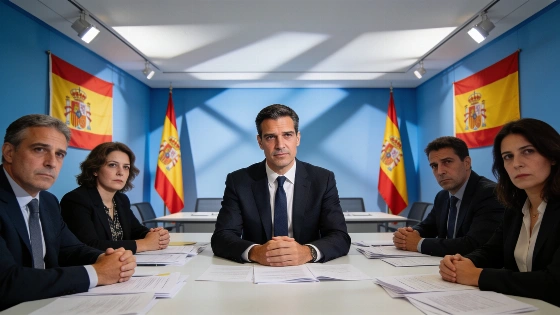
The PSOE is intensifying preparations for the 2027 municipal and regional elections. Internal criticism remains, but party leadership pushes for unity. Government measures and budget plans are set to shape the coming months.
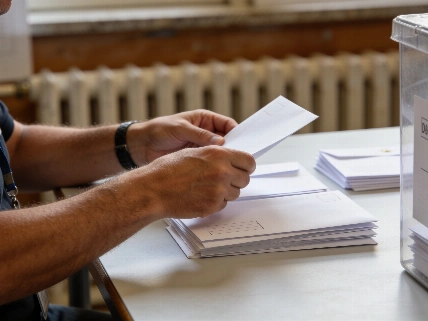
The Spanish Socialist Workers' Party (PSOE) is sharpening its strategy for the 2027 municipal and regional elections, as internal debates and external pressures shape the party's agenda. The upcoming vote is seen as a critical test for the party's territorial influence, with over 8,200 municipalities and several autonomous communities preparing for the polls.
This week, the government is set to extend economic protection measures introduced in response to the conflict in Iran. The Council of Ministers will approve a 90-day extension, ensuring no regulatory gap as the situation in the Middle East continues to affect Spain's economy. The macroeconomic framework will also be updated, paving the way for the first General State Budget of the current legislature, expected between October and December.
These steps are part of a broader timeline leading up to the general elections, widely anticipated for the first quarter of 2027. Parliamentary groups are aligning their strategies around this schedule, with the PSOE leadership emphasizing the importance of the upcoming local and regional contests. The federal committee meeting over the weekend reaffirmed explicit support for Pedro Sánchez, despite ongoing criticism from some regional leaders.
While most of the party backs the current direction, dissent remains. Emiliano García-Page, president of Castilla-La Mancha, and Miriam Andrés, mayor of Palencia, voiced strong reservations about the federal leadership, particularly regarding the party's handling of corruption cases and alliances with leftist and nationalist groups. Their criticism stands out against a backdrop of general support and silence from other members, though some, like Madrid's Manuel de la Rocha, continue to back the government's left-leaning policies.
Opposition parties, including ERC, PNV, and Bildu, have pressed the government for more substantive action, questioning the purpose of simply maintaining power. Sumar, the coalition partner, has also called for renewed momentum on its legislative proposals, urging the PSOE to show greater resolve. The government plans to reactivate the Public Integrity bill, approved in February, for immediate discussion in Congress.
Meanwhile, the People's Party (PP) is recalibrating its approach, with leader Alberto Núñez Feijóo signaling a shift on Catalonia and acknowledging Vox as a partner for future governance. The PSOE leadership has highlighted these moves as part of the broader political landscape, even as the party faces judicial scrutiny over several cases.
Looking ahead, the PSOE's electoral program for 2027 is expected to draw heavily from the upcoming budget proposal. The party aims to use the coming months to solidify its platform and address internal divisions, aware that the outcome of the municipal and regional elections will be decisive for its future territorial power.
For context, Spain's municipal and regional elections are held every four years, with the last round in May 2023. These votes determine local governance and influence national politics, especially in regions with strong identities. The PSOE's current focus reflects the high stakes involved, as the party seeks to recover ground lost in previous cycles and respond to both internal and external challenges.