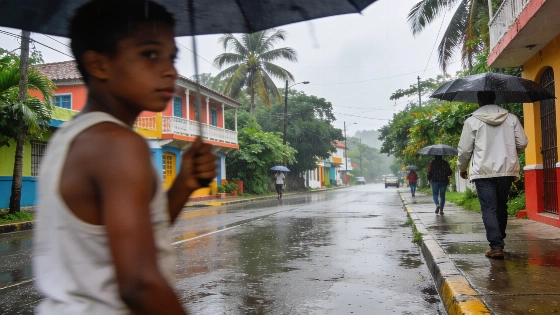
Puerto Plata prepares for a Saturday marked by a 55% chance of rain and temperatures reaching 34°C. The forecast signals possible showers and variable cloud cover, affecting daily routines and outdoor plans.
Puerto Plata is set for a Saturday of unstable weather, with meteorological forecasts indicating a 55% probability of rain and temperatures climbing to 34°C. Residents and visitors in this northern Dominican city will need to plan for both heat and the real possibility of showers, as the day brings a mix of sun and clouds. The minimum temperature is expected to drop to 24°C, while cloud cover will hover around 28%. By nightfall, the chance of rain decreases to 13%, but the risk of precipitation remains present throughout the day.
This weather pattern is not unusual for Puerto Plata, one of the Dominican Republic’s most populous cities and a key hub on the country’s northern coast. The region’s tropical climate typically brings its driest months from June to August, but rainfall can still occur, especially as the wet season extends from May through November. October and November are historically the wettest months, but August often sees sudden downpours and high humidity, complicating daily life and travel plans.
For those considering outdoor activities or commuting to work, the forecast means extra caution is advised. Carrying an umbrella or light rain jacket could be necessary, but the high temperatures also call for measures against heat exposure. The combination of heat and humidity can make conditions uncomfortable, particularly during midday hours. According to recent weather outlooks, such as the recent analysis of August weather trends, the region is experiencing a period of above-average temperatures, with rainfall patterns remaining unpredictable.
The Dominican Republic’s climate is shaped by its Caribbean location, resulting in abundant rainfall and average temperatures ranging from 25°C to 30°C. The rainy season, which spans from May to November, brings the heaviest downpours in May, August, and September. While most of the country experiences tropical conditions, higher-altitude areas like Constanza, Jarabacoa, and Ocoa can see temperatures drop sharply in winter, sometimes reaching as low as -5°C. The nation is also vulnerable to hurricanes, with an average of one major event every seven to eight years and tropical storms occurring roughly every four years. Flooding remains a recurring concern during the wettest months.
Understanding these weather dynamics is crucial for both locals and tourists, as sudden changes can disrupt transportation, outdoor events, and daily routines. The current forecast for Puerto Plata highlights the need for flexibility and preparedness, especially as the city navigates the challenges of a tropical climate during the peak of summer.