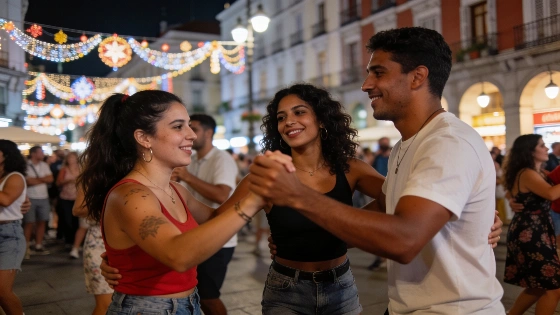
Madrid’s traditional festivals are changing as Latin American residents bring their own customs. Music, dance, and food from across the Atlantic now define local celebrations. The city’s identity is evolving in real time.
Madrid’s most iconic street festivals are undergoing a visible transformation as Latin American communities leave their mark on the city’s traditions. In neighborhoods like La Latina, the classic image of local verbenas is giving way to a blend of Spanish and Latin American influences, with music, dance, and food reflecting the city’s changing population. The shift is especially clear during major events such as the Virgen de la Paloma festivities, where the atmosphere now feels distinctly more international.
Business owners like Wilmer Yajamin, who runs Mezcaloteca Corazón Agavero, have played a role in this evolution. Yajamin once decorated his bar with catrinas dressed as chulapas, merging Mexican and Madrid symbols. While some longtime residents initially reacted with discomfort, the city’s fiestas have gradually absorbed these new elements. Today, mariachi bands and Latin rhythms are as much a part of the celebrations as traditional Spanish music.
Historians note that Madrid’s festivals have always adapted to newcomers. Rubén Pallol Trigueros, a specialist in the city’s social history, points out that verbenas have long served as an entry point for those arriving from other regions or countries. The open nature of these events—without strict admission or dress codes—makes it easy for new customs to take root. This adaptability is now visible as Latin American residents, especially from Mexico, Colombia, Venezuela, and the Dominican Republic, bring their own festive traditions to the streets.
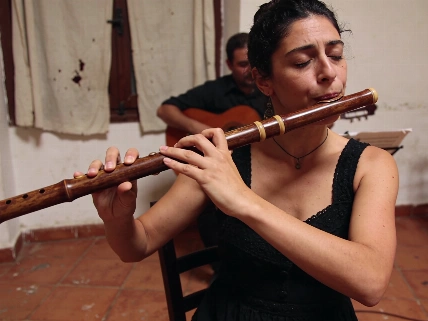
For many, the change is most noticeable in the music and the way people celebrate. Reggaeton, salsa, merengue, and champeta now dominate the soundscape at local fiestas, and the most enthusiastic dancers often speak with Latin American accents. Residents like Joselo Pérez, who has lived in Madrid for two decades, describe the new atmosphere as more relaxed and vibrant. Others, such as Moisés León and Omar Herrera, say they have found a sense of belonging in these evolving celebrations, where cultural boundaries blur and everyone is welcome to join in.
The transformation of Madrid’s festivals is not happening in isolation. Social media, international travel, and the arrival of new businesses have accelerated the blending of traditions. The city’s fiestas now serve as a meeting point for diverse communities, reflecting broader changes in Spanish society. This trend is not unique to Madrid; other Spanish cities are also seeing their local customs influenced by new waves of migration and cultural exchange. In some cases, these changes have sparked debate, as seen in other parts of Spain where local responses to migration have been more contentious. For example, recent tensions in Ceuta over neighborhood patrols and migrant presence, as reported in coverage of Ceuta’s community patrols, highlight the varied ways Spanish cities are adapting to demographic shifts.
Madrid’s evolving fiestas illustrate how urban traditions can absorb and reflect new influences. The city’s openness to change has allowed Latin American customs to become part of the local identity, making the capital’s festivals a living example of cultural integration. As Madrid continues to grow and diversify, its street celebrations are likely to remain a barometer of the city’s social dynamics, offering both residents and newcomers a space to share and reinvent what it means to be madrileño.
Madrid’s population has become increasingly diverse over the past decade, with Latin American nationals now representing a significant share of new arrivals. According to municipal data, the city’s foreign-born population has grown steadily, and Latin American communities are among the most active in local cultural life. The integration of their traditions into public events is seen by many as a sign of Madrid’s adaptability and resilience. While some traditionalists express concern about the pace of change, most observers agree that the city’s fiestas remain a vital space for social cohesion and cultural exchange. The evolution of these celebrations underscores the broader reality of modern Spain: a country where migration and multiculturalism are reshaping everyday life, often in ways that bring new energy and creativity to longstanding customs.