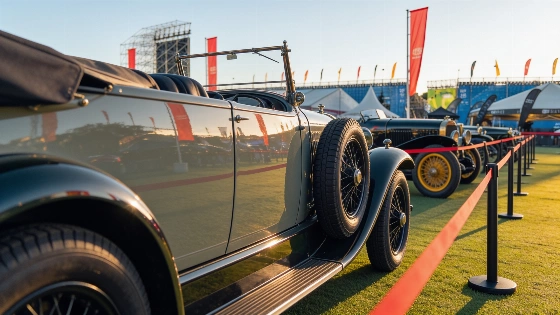
Nearly sixty rare cars, from hypercars to historic prototypes, filled the MadRing circuit during the 2026 Spanish Grand Prix. CarDesign.es organized an exhibition that set a new standard for automotive events in Spain.
Pagani Huayra R, Ferrari 296 Speciale Piloti, and a Lamborghini Countach Intervention Car from the 1982 Monaco GP—these weren’t tucked away in a museum, but parked trackside at MadRing for the 2026 Spanish Grand Prix. Over three days, the circuit became a showcase for nearly sixty cars, with CarDesign.es curating what turned out to be the largest public display of hypercars, supercars, and automotive history ever seen at a Spanish motorsport event.
This wasn’t just a static lineup. Each Fan Zone told a different part of the story, grouping cars by theme and era. Bulevar Cibeles and Bulevar Sol were packed with limited-edition hypercars and competition machines, each with technical and historical notes prepared by the CarDesign.es team. Visitors could move from the handmade Hispano Suiza Carmen Sagrera to the raw Nichols N1A in just a few steps.
The 2026 Spanish Grand Prix at MADRING marked the first time in 35 years that the event moved from Barcelona to a new city circuit in Madrid, as confirmed by Reuters and FIA.
Elsewhere, the Monumental zone focused on classic design and craftsmanship from the golden age of coachbuilding. The Mercedes-Benz 190 SL and Rolls-Royce Phantom VII (once owned by the Baronesa Thyssen) stood out, showing that design is about more than just horsepower. In the Barrio zone, a recreation of the Mercedes-Benz 300 SLR faced off with its modern descendant, the SLR McLaren, highlighting what changes and what stays the same as technology and rules evolve.
Team identity and national pride were woven in as well. The Distrito zone mapped the history of legendary racing teams—Ferrari, McLaren, Lotus, and others—showing how racing DNA moves from the track to the street. Nearby, Marca España paid tribute to Spanish engineering, tracing a line from the Hispano Suiza Alfonso XIII and Ricart 166 Compressor through the custom work of Pedro Serra and Eduardo Barreiros, and on to student-built Formula cars from Tecnun and Universidad Carlos III de Madrid.
For anyone with a Fan Zone ticket, the event was a crash course in automotive history, all packed into one weekend. The goal was clear: put Spanish car culture on the map, not as a side note, but as a real force in design and innovation. The IV Premios CarDesign.es and the IED CarDesign.es 2026 Prize for best Transport Design thesis added a competitive edge, highlighting both established icons and new talent.
According to independent guides and official sources, MADRING featured multiple Fan Zones—Bulevar Cibeles, Sol, Barrio, Distrito, and Monumental—each offering unique access and activities tied to specific grandstand sectors. This structure allowed manufacturers like Ford to host dedicated brand experiences, including demonstration areas and off-road sections, further enhancing the public engagement around the Grand Prix.
Spain’s enthusiasm for classic cars isn’t new. As reported earlier, rallies and rare car gatherings have long drawn crowds across the country. But the scale and careful curation at MadRing raised the bar, mixing international prestige with a distinctly Spanish perspective.
According to Google/SpainAuto, the way the exhibition grouped cars by theme, era, and engineering background did more than just put on a show. It gave visitors context, showing not only what makes a car beautiful, but why some designs last while others fade. The inclusion of academic prototypes and student-built racers made it clear: the future of Spanish automotive design is being shaped now, in classrooms and workshops as much as in factories.
MadRing wasn’t just about celebrating the past. By bringing together icons, innovators, and young designers, CarDesign.es made a statement: Spain has a place in the global conversation about automotive design, and events like this are how that claim is made—openly and with ambition.