Dacia Jogger after 100,000 km: What the Big Endurance Test Revealed. The Dacia Jogger with a hybrid powertrain and seven seats has completed a 100,000 km endurance trial. The test highlighted not only the strengths of the model, but also its weaknesses—factors that could influence the choice of a family car.
The seven-seat Dacia Jogger with a hybrid system came into the spotlight after completing a 100,000-kilometer run. The test, conducted since July 2022, provided insight into how well this versatile vehicle meets the expectations of buyers seeking an affordable and spacious family car.
The Jogger quickly became popular among editorial staff thanks to its roomy cabin and trunk, which on paper accommodates up to 1,819 liters. However, in practice, it turned out that the actual cargo capacity is limited: due to the uneven floor and layout features, only about half of the stated volume fits. Nevertheless, at a price of around 21,450 euros, the model remains one of the most versatile on the market.
Engine and efficiency
The main technical feature of the Jogger is its three-cylinder engine, which can run on both gasoline and liquefied petroleum gas (LPG). Using LPG does indeed lower fuel costs, although it increases consumption. With an empty cabin, the engine power is sufficient, but when fully loaded and on the highway, a lack of torque and noticeable noise become apparent. The gearbox is also not particularly smooth: first gear is too short, forcing you to start off in second.
Wear and build quality
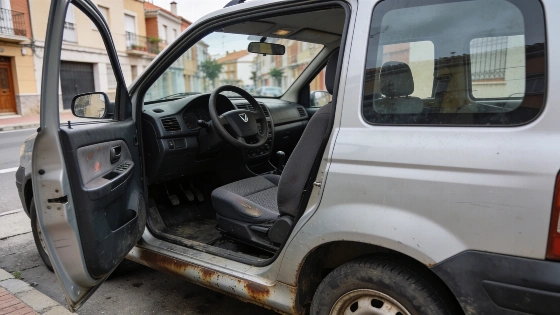
After 100,000 km of testing, experts noted that the interior trim materials look budget-friendly: mats wear out quickly, plastic elements get scratched, and some parts, such as USB ports, become loose over time. The body creaks on rough roads, and the suspension and steering lack precision. However, the seats and steering wheel have kept a decent appearance, and the front seats did not cause any comfort complaints even after intensive use.
Corrosion is the main drawback
The most serious flaw turned out to be corrosion. Rust signs were found on hood hinges, bumper mounts, welds, and even near the LPG tank. DEKRA experts recorded early signs of corrosion on the underbody, at exhaust system mounts, and on air conditioning pipe clamps. Nevertheless, the powertrain, transmission, and exhaust system performed well: no serious technical problems were identified, and parts wear matched the mileage.
Practical conclusions
Losses of refrigerant in the air conditioning system remained not fully explained, but this did not affect the safety or performance of the car. Overall, after disassembly and diagnostics, the Jogger maintained functionality and did not raise major mechanical concerns. However, potential owners should consider the risk of corrosion, especially if the car is used in regions with a humid climate.
Among competitors in the market for three-row family cars, there are other notable models, such as large electric crossovers that have recently undergone their own tests — for more details on the comparison between the Kia EV9 GT and Volvo EX90, see the article about the battle of electric giants.
Conclusion
After 100,000 km, the Dacia Jogger looks fresher than many of its predecessors and remains one of the most affordable options for large families. The main compromise is the need to monitor the body condition and protect the car from corrosion. In all other respects, the Jogger has confirmed its reliability and practicality, making it an attractive choice for those looking for an inexpensive and spacious vehicle.