Why Schools in Rural Areas Are Closing and How Teachers Struggle to Survive. In small villages of Castile and León, schools operate with just three or four students. Teachers face the risk of class closures due to families leaving the area. Authorities continue funding, but the situation remains tense.
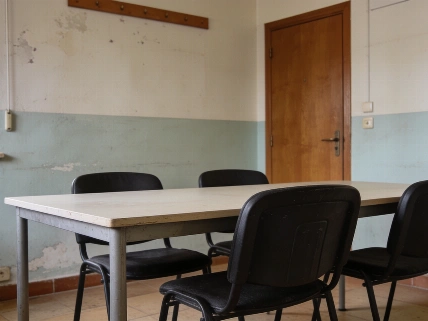
In Castile and León, schools continue to operate where there are only three or four children in a class. As noted by EL PAÍS, teachers in such institutions face the constant threat of closure due to a decreasing number of families with children. In some cases, like the village of Torrefrades (province of Zamora), the school will not reopen next academic year: the graduates are leaving, and no new pupils are expected.
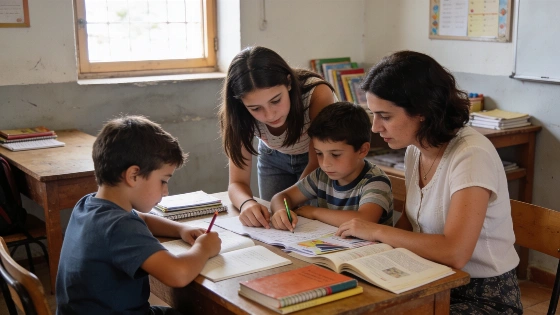
Teachers emphasize that in these conditions, the educational process requires a special approach. Children aged from four to twelve may be in the same classroom, each with their own needs and characteristics. For example, in Torrefrades, among the four students, there is a child with dyslexia and a girl with disabilities. Teachers are forced to adapt lessons daily to give each child attention, often working almost individually.
In the village of Flores de Ávila (CRA Santa Teresa), teachers have to combine individual and group lessons and adapt programs for each student. According to the teachers, such conditions allow them to engage more deeply in the process but require high flexibility and constant preparation. In small groups, children learn to help each other: older ones read to the younger, and joint projects become part of everyday life.
The director of CRA El Redondal in the province of León notes that despite the small number of students, the schools are equipped with modern technology and use new educational methods, including robotics. Regional authorities maintain funding even for classes with just three children, which allows educational infrastructure to be preserved in small settlements.
A distinctive feature of rural schools is their close connection to the local community. The educational process often extends beyond the classroom: children gather mushrooms, help shear sheep, and care for the school garden. Education is based on principles of mutual assistance and trust, and cases of bullying are almost nonexistent. However, teachers acknowledge that children's opportunities for developing social skills are limited due to the small circle of peers.
The situation is complicated by the ongoing depopulation of villages. According to EL PAÍS, school closures become inevitable when there are no children left in a village. This not only deprives residents of educational services, but also accelerates the decline of settlements. In Spain, rural schools have traditionally served as the center of village life, and their disappearance is seen as a signal for further population outflow.
For reference: in Castile and León, there is a system of rural consolidated schools (CRA), where classes are made up of children of different ages. In recent years, regional authorities have been trying to preserve such institutions despite a decline in population. According to Spain’s Ministry of Education, there are more than 2,000 small schools in the country, most of them located in rural areas. Their preservation is seen as a key factor in supporting life in small towns and villages.