Train traffic across the Netherlands stopped after sabotage hit key railway lines on Prinsjesdag. The government has ordered a full investigation, and the timing has raised questions about possible motives.
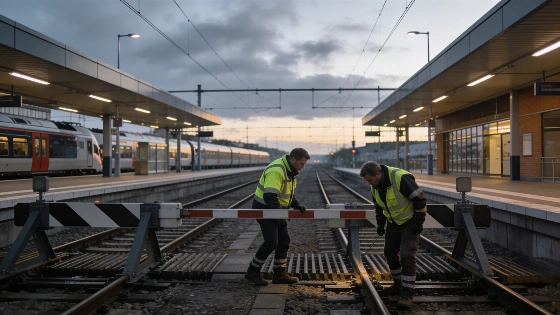
Train service in the Netherlands came to a standstill on Tuesday after a coordinated sabotage campaign targeted the national rail network. Tubes were deliberately attached to tracks at about 20 locations, causing widespread failures and forcing trains to stop on major routes. Thousands of commuters were left stranded during the morning rush.
The disruption happened on Prinsjesdag, the annual Budget Day when the king travels through The Hague in a public ceremony. Officials have not confirmed a direct link between the sabotage and the event, but the timing has led to speculation about the attackers' motives.
DutchNews reported that the actual number of sabotage points exceeded 30, with the first pipe fragments discovered as early as 05:30 in the morning.
ProRail, the state infrastructure operator, said the objects were intentionally fixed to the rails. This caused signaling systems to register the tracks as occupied, which automatically stopped all train movement in the affected areas. The result was a chain reaction of delays and cancellations, especially on the Amersfoort–Zwolle, Utrecht–Arnhem, Arnhem–Zutphen, and Zwolle–Leeuwarden lines. NS, the national operator, reported severe delays around Zwolle, Deventer, and Amersfoort during peak hours. Reuters and AP noted that the central and northern regions were hit hardest.
One train struck a tube near Steenwijk in Overijssel, but ProRail confirmed there were no injuries. The sabotage also disabled level crossings, which disrupted road traffic and added to the problems for commuters and local residents. AP reported that some road crossings malfunctioned due to the damage, affecting both rail and road travel.
Authorities responded quickly. Annet Bertram, secretary of state for Infrastructure and Water Management, called the incident deeply concerning and demanded a full investigation. The National Police are leading the inquiry, but so far, no group has claimed responsibility and the motive is still unknown. ProRail said all evidence points to a deliberate, coordinated attack, but the identity of those responsible remains unclear. BBC and DutchNews reported that the Dutch intelligence service AIVD is also involved in the investigation.
ProRail stated it would continue searching for additional sites of interference and aimed to restore safe operations as quickly as possible. NS warned passengers to expect significant delays and disruptions, while the investigation into the sabotage remains ongoing with no suspects or motives officially identified.
The timing and scale of the sabotage have drawn comparisons to other recent security incidents in Europe, where attacks on critical infrastructure have caused major disruption. As reported earlier, authorities across the continent are increasingly alert to threats that can paralyze essential services and shake public confidence.
For the Netherlands, the attack exposed weaknesses in the railway system's safety protocols. The fact that simple objects could shut down so much of the network will likely lead to a review of both physical and digital security. The government has promised to find and prosecute those responsible, but the incident shows that even advanced transport systems can be vulnerable to targeted disruption. Until the investigation provides answers, Dutch commuters and officials are left facing the reality that critical infrastructure can be stopped with surprising ease.