Pedro Sánchez has set the stage for the 2027 elections, calling on PSOE to overcome corruption scandals. The president strongly defended Zapatero and criticized the leak of personal data, marking a tense start to the campaign.
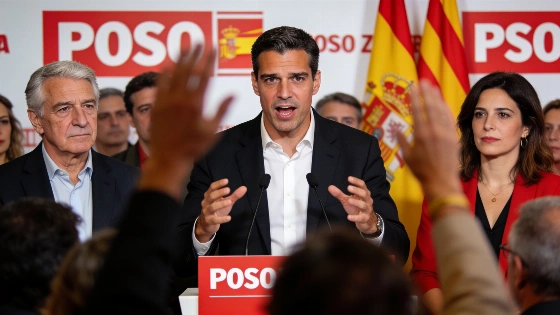
Pedro Sánchez has officially opened the PSOE’s campaign for the 2027 general elections, using the party’s Federal Committee meeting in Madrid to call for unity and resilience amid ongoing corruption controversies. The president made it clear that the next national vote will take place in 2027, with regional and municipal elections to follow in May, and urged the party to focus on regaining public trust after a period of damaging scandals.
During the meeting, Sánchez repeated many of the arguments he presented in Congress earlier in the week, emphasizing the need to leave behind the shadow of corruption. He called on PSOE members to look ahead and work towards a new majority that would allow him to remain in office beyond 2027. The president outlined his vision for “la España de 2030,” highlighting goals such as 80% renewable electricity, free public education for children aged 0 to 3, expanded public housing, and strengthened social protection. He also pledged to continue efforts on equality and to abolish prostitution.
A key moment came when Sánchez delivered a forceful defense of former president José Luis Rodríguez Zapatero, as well as his wife Begoña Gómez and his brother, all of whom are under investigation in cases Sánchez described as “an outrage.” He condemned the leak of Zapatero’s private data, calling it a serious violation of fundamental rights and warning that such actions are incompatible with democratic standards. The president insisted that neither his wife nor his brother had committed any wrongdoing, stating that all they ask from the justice system is fairness.
The Federal Committee, which Sánchez controls with a strong majority, responded with a lengthy standing ovation. However, not all voices were in agreement. Emiliano García Page, president of Castilla-La Mancha, reiterated his criticism of the party’s decision not to call early elections last year, arguing that PSOE’s position has weakened since then. The meeting took place almost exactly one year after the previous summer’s session, which was overshadowed by corruption allegations involving former party organization secretaries Santos Cerdán and José Luis Ábalos.
Sánchez framed the upcoming campaign as a battle against the conservative PP and far-right Vox, warning that only PSOE can prevent the rollback of rights and public services. He announced the start of the party’s primary process and called on members to mobilize for victory, describing PSOE as a vital refuge for millions and the government as their best defense.
Recent months have seen heightened political tension over issues of transparency and governance. For example, the Constitutional Court recently criticized the Madrid Assembly for procedural violations in the approval of a key media reform, highlighting the broader climate of institutional conflict. Details of that case can be found in this analysis of the Constitutional Court’s ruling on the Telemadrid law.
Spain’s political landscape remains volatile as the country approaches a critical electoral cycle. The PSOE faces the challenge of restoring its image while navigating internal dissent and external attacks. The outcome of the 2027 elections will determine the direction of major policy areas, including social spending, education, and civil rights. As the campaign begins, the party’s ability to present a united front and address public concerns over corruption will be decisive for its prospects.