Pedro Sánchez signals a shift in Madrid’s stance on the Ceuta border crisis. The government now acknowledges Moroccan involvement is possible, as new intelligence and official reports come to light. Spain’s border policy faces new pressure.
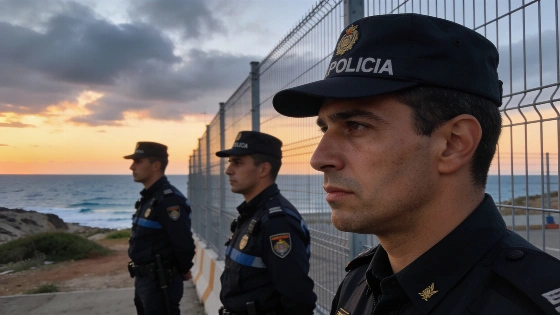
Spain’s position on the Ceuta border crisis has changed sharply. After weeks of careful statements, Prime Minister Pedro Sánchez now says Moroccan involvement in the mass entry of migrants cannot be ruled out. This is a clear break from the government’s earlier insistence that there was no evidence linking Rabat to the events that overwhelmed Ceuta’s border at the end of July.
Appearing before Congress on September 3, 2026, Sánchez said Spanish intelligence services have not found solid proof implicating Morocco, Russia, or Israel in organizing the border breach. He noted that neither the Ministry of Foreign Affairs, the European Commission, nor international bodies have confirmed Moroccan state involvement, but added that this could change as investigations continue. The phrase "for the moment" now shapes Madrid’s position, showing a willingness to act if new evidence appears, according to Reuters and other outlets.
According to BBC and Reuters, about 72,000 people crossed from Morocco into Ceuta during the mass border breach on July 30–31. Later reports suggest even higher numbers, with dozens dead or missing.
This shift follows a confidential report from the Centro Nacional de Inmigración y Fronteras, sent to Judge María Tardón. The document describes "prior planning" and "active guidance by Moroccan forces" during the July 30–31 events, suggesting coordination beyond what criminal networks could manage. The government’s earlier denials have given way to a more cautious stance: if hard evidence appears, Spain will respond.
Behind the scenes, diplomatic tensions have grown. Sánchez revealed that Spain summoned Morocco’s ambassador, Karima Benyaich, on August 21, after Moroccan ministers made public statements about "historic rights" over Ceuta and Melilla. This move, kept quiet until now, shows how sensitive the situation is and the government’s wish to avoid open confrontation while investigations are ongoing. Spanish media reports from September 3 say the government found the ministers' statements unacceptable, highlighting the fragile state of relations.
Despite mounting evidence, Sánchez maintains that no Spanish or international agency has provided conclusive proof of state-backed coordination. He says all intelligence and security reports reviewed by the government before the crisis described only routine risks, not the scale or likelihood of the mass entry that happened. This contrasts with reports that some intelligence warnings did flag the risk of a "collapse" at the border, as reported earlier.
BBC and France24 have cited Spanish police and internal reports alleging "total permissiveness" by Moroccan security forces during the border breach. While this does not amount to official confirmation of state orchestration, it adds a new layer to the context of the crisis and has fueled debate within Spain about the adequacy of border cooperation.
Sánchez says the surge in crossings was first seen as a seasonal rise, with daily swim entries going from 10 to 37, then jumping to 194 on the eve of the crisis. Coordination between Madrid and Ceuta’s local government was described as adequate, though the prime minister disputed claims that central authorities were warned of an imminent mass entry. He blamed the sudden escalation on July 30 on the viral spread of a court ruling on "hot returns," which he argued triggered a wave of crossings by young migrants.
Pressed on the government’s response, Sánchez admitted shortcomings for the first time. Speaking to Ceuta’s residents, he said official actions have not been enough to restore normality and acknowledged both successes and failures in the state’s handling of the crisis. Until now, only the defense minister had publicly apologized for the sense of abandonment in Ceuta.
The prime minister also confirmed that King Felipe VI is expected to visit Ceuta and Melilla "in the coming weeks," aiming to reinforce the state’s commitment to the two autonomous cities. This follows calls from Ceuta’s president for a royal visit as a show of support during ongoing uncertainty.
Spain’s changing position on the Ceuta crisis shows a government caught between diplomatic caution and growing pressure for answers. The willingness to reconsider Morocco’s role, after weeks of denial, is less about transparency than about responding to mounting evidence and public scrutiny. As the investigation continues, Madrid’s credibility will depend on its ability to balance national security with diplomatic pragmatism, without losing the trust of its own citizens in Ceuta and Melilla.