Dozens of Guardia Civil and military personnel have arrived in Ceuta. Authorities are on alert for a potential mass entry from Morocco. Residents remain uneasy but expect no repeat of previous incidents.
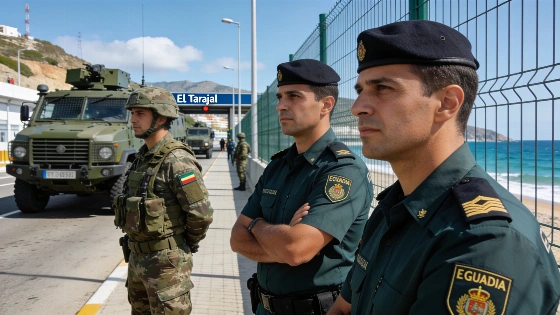
Ceuta has seen a significant increase in security presence as dozens of Guardia Civil officers and military personnel have been deployed to the city ahead of August 15. The move comes after recent mass crossings from Morocco, which left the border area tense and residents wary of further incidents. While the alert level has been raised, officials stress that there is no concrete threat of a new large-scale entry, citing Morocco's reinforced border controls as a key factor in reducing the risk.
On the ground, the atmosphere remains cautious. Security forces are visible both at the El Tarajal crossing and throughout the city, with patrols and military vehicles stationed near strategic points. Many of the officers have interrupted their holidays or volunteered for the assignment, reflecting the seriousness with which authorities are treating the situation. Despite the heightened alert, the deployment is described as precautionary rather than a response to an imminent threat.
Residents of Ceuta express a mix of fatigue and anxiety. The memory of thousands crossing the border just two weeks ago is still fresh, and while most believe that Morocco's current measures will prevent a repeat, uncertainty lingers. Some locals, like financial sector worker Lucía Granados, are confident that the reinforced controls will hold. Others, such as social worker Elena Larios, admit to ongoing nervousness and a sense of unpredictability about what the weekend might bring.
Since the start of the crisis, the number of police and Guardia Civil officers in Ceuta has risen from around 1,100 to nearly 1,600, with an additional 2,000 military personnel providing support. The increased presence is not limited to the border itself; authorities are also making efforts to ensure visibility in the city’s streets, aiming to reassure the population and deter any potential unrest.
At the El Tarajal crossing, the flow of people continues, but the dynamics have shifted. While some young migrants remain hopeful for a future in Spain, many adults are now returning to Morocco, guided by Spanish officers through the controlled passage. The border post, usually closed, has been opened for these returns, reflecting a more managed approach to the situation. Meanwhile, Moroccan families with valid visas continue to enter Ceuta for tourism, but the border remains tightly sealed for most, with Rabat maintaining strict controls.
Local taxi drivers and residents note that while the risk of another mass entry appears low due to Morocco's tough stance, some believe that migrants from sub-Saharan Africa, who are still present on nearby beaches, may attempt crossings. The situation remains fluid, with both sides of the border closely monitored by security forces.
Recent developments in Ceuta echo broader tensions between Spain and Morocco over migration and border management. As highlighted in a related report on diplomatic strains, political pressure has mounted in Madrid following Morocco's signals about suspending extradition agreements, underscoring the complex relationship between the two countries.
Ceuta's unique position as a Spanish enclave in North Africa makes it a focal point for migration and security challenges. The city’s border with Morocco is one of the European Union’s most sensitive external frontiers, regularly drawing attention from both Spanish authorities and the wider EU. The current measures reflect ongoing efforts to balance humanitarian concerns with the need for order and security. As the situation develops, Ceuta remains under close watch, with authorities prepared to respond to any changes at the border.