Silvana Estrada captivated Barcelona with a concert blending Mexican folk and modern melodies. Her set at Les Nits d’Occident highlighted personal loss, cultural roots, and a new voice in Latin American music.
Barcelona’s Les Nits d’Occident festival witnessed a standout performance as Silvana Estrada, the 29-year-old Mexican singer-songwriter, delivered a concert marked by emotional depth and musical precision. Estrada, known for her ability to bridge traditional Latin American sounds with contemporary influences, performed a set that underscored both her heritage and her evolving artistry.
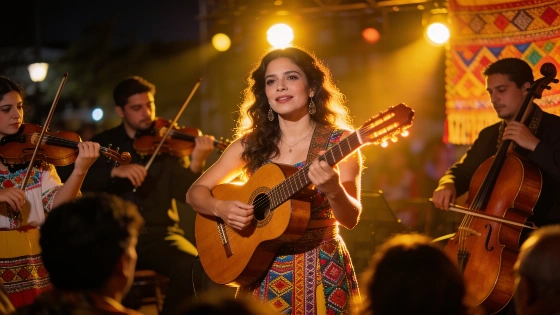
Estrada’s background is deeply rooted in music, with parents involved in both performance and instrument making. This lineage was evident as she moved seamlessly between her cuatro venezolano and acoustic guitar, supported by a minimalist ensemble: two violins, viola, cello, saxophone and clarinet, keyboard, and drums. The absence of a bass, with only occasional synthesized low notes, created an intimate atmosphere that allowed her warm, flexible voice to take center stage.
The concert’s repertoire drew heavily from Mexican folk traditions such as son jarocho, but Estrada avoided strict genre boundaries. Songs like Good Luck, Good Night echoed bolero and mariachi influences, while Tenías que ser tú brought cumbia rhythms to the fore. The evening concluded with an almost improvised rendition of El alma mía, leaving the audience in a reflective mood.
Throughout the performance, Estrada’s storytelling focused on themes of love, heartbreak, departure, and memory. She openly discussed the personal losses that shaped her latest album, Vendrán suaves lluvias, a work inspired by poet Sara Teasdale and composed during a period of grief. The album’s title track and songs like Como un pájaro showcased her lyrical sensitivity, with the audience quietly echoing her words.
Estrada also paid tribute to iconic figures in Latin American music. Her interpretation of Un rayo de luz included lines from Chavela Vargas, while Aguacero de mayo nodded to Colombian legend Totó La Momposina. The setlist, chosen spontaneously each night, reflected Estrada’s belief that music should remain alive and unrehearsed, never reduced to rote repetition.
Identity and belonging were recurring motifs. Songs like Flores and Lila Alelí evoked her native Veracruz, while Guillermina honored Venezuela and celebrated the Latin American diaspora present in the audience. The concert’s atmosphere was one of shared experience, with listeners quietly supporting Estrada’s narratives rather than singing along loudly.
In recent years, Barcelona has become a hub for diverse musical expressions, and events like Les Nits d’Occident highlight the city’s role in showcasing international talent. The festival’s programming often features artists who, like Estrada, blend tradition with innovation. This approach mirrors broader trends in Spanish cultural life, where audiences increasingly seek performances that connect personal stories with collective memory. For those interested in the intersection of music and social debate, the city has also hosted moments of tension and surprise, such as the on-air incident involving Marta Gómez Montero and Jesús Cintora, which drew attention to the emotional stakes of live performance (see coverage of the unexpected walkout on 'Malas lenguas').
Silvana Estrada’s concert ultimately stood out for its delicacy and sincerity. Her ability to draw beauty from pain, and to connect with listeners on a personal level, reinforced her reputation as a leading voice in contemporary Latin American music. The evening’s careful balance of tradition and originality left a lasting impression on all who attended.
For context, Silvana Estrada was born in Xalapa, Veracruz, and has released three albums to date. Her work is often cited for its poetic lyrics and innovative arrangements, and she continues to gain recognition across Spain and Latin America. Les Nits d’Occident, held annually in Barcelona, is known for bringing together artists who represent the evolving landscape of world music.