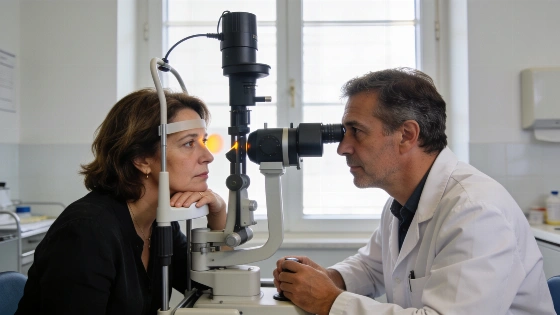
Eye injuries from viewing the solar eclipse can remain hidden for hours or days. Experts warn there is no specific treatment. Prevention with certified glasses is essential to avoid irreversible vision loss.
In Spain, the aftermath of the recent solar eclipse has raised concerns among ophthalmologists about delayed-onset eye injuries. While the retina can be damaged instantly by looking at the sun, symptoms often do not appear until many hours later. This delay means many people may not immediately connect their vision problems to eclipse exposure, especially since the retina lacks pain receptors and does not signal injury at the moment it occurs.
Specialists such as Jesús Merayo, director of the Instituto Universitario Fernández-Vega, emphasize that there is no effective treatment to reverse retinal damage caused by solar radiation. The only reliable protection is prevention—either by using certified eclipse glasses or by avoiding direct exposure altogether. According to Lucía Galletero, ophthalmologist at Vithas Vitoria, symptoms of solar retinopathy typically emerge within 12 to 28 hours after exposure. The most common signs include blurred vision, a central dark or blurry spot, distortion of straight lines, color perception changes, and difficulty reading or focusing on details.
Anyone experiencing these symptoms after an eclipse should seek immediate evaluation by an ophthalmologist. Experts stress that some retinal injuries may be irreversible, making early detection and prevention critical. The risk is not limited to those who look directly at the sun without protection; using inadequate methods to observe the eclipse can also result in permanent damage.
Solar radiation remains dangerous even when the sun is partially obscured by the moon. During an eclipse, the eye's natural focusing system (cornea and lens) can concentrate the sun's energy onto the retina, intensifying the thermal and photochemical effects. This can lead to solar retinopathy, a condition that damages the macula—the area responsible for sharp, central vision and color perception. In severe cases, this may result in permanent vision loss.
As highlighted in a related report on eclipse safety, even brief exposure without proper protection can have lasting consequences. For more on the strict safety measures recommended during eclipses in Spain, see the analysis of why removing eclipse glasses too soon can cause lasting eye damage.
Solar retinopathy is a well-documented risk during astronomical events, but public awareness remains limited. In Spain, authorities and medical associations regularly issue warnings ahead of eclipses, yet incidents of eye injury still occur. The lack of immediate symptoms often leads to delayed medical attention, reducing the chances of recovery. While some minor cases may improve over time, most retinal burns from solar exposure are permanent. The safest approach remains strict adherence to certified protective measures and avoiding any direct or indirect viewing of the sun without proper equipment.