Chinese automakers are making fast inroads in Spain, challenging established brands and changing the face of the European car industry. Industry expert Tu Le explains why Spain is now at the center of this shift and what it means for the future of mobility.
Chinese electric vehicles are no longer a distant prospect for Europe—they're already here, and Spain is quickly turning into their main entry point. Industry consultant Tu Le, who spent years in China and grew up in Detroit, now sees Spain as the new Detroit of the European Union. His view is direct: traditional carmakers must adapt or risk falling behind as Chinese brands set the pace in technology, pricing, and speed.
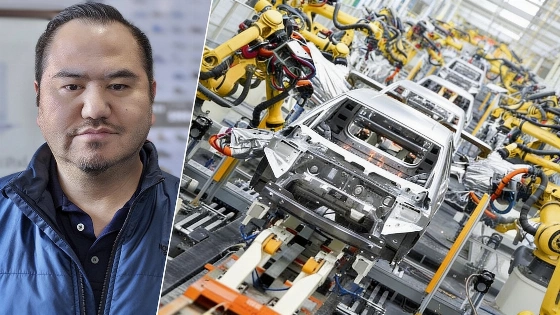
Le's background spans both the old and new automotive worlds. He started out at General Motors and Ford, then moved to China in 2009, where he saw the country's push to lead in electric vehicles up close. Later, he founded Sino Auto Insights, advising both established companies and startups on how to navigate the changing market. Le credits China's long-term government investment in electric vehicles, and its support for entrepreneurs, as the foundation for today's surge.
By July 2026, fully electric vehicles accounted for 9.6% of new car registrations in Spain, with BYD leading among battery electric vehicle brands.
But the real shift, he says, came when Tesla was invited to build in Shanghai in 2019. That move set off rapid growth in China's EV sector, pushing both local and foreign brands to innovate or get left behind. Now, Chinese manufacturers like BYD, Geely, XPeng, Xiaomi, Leapmotor, Chery, and SAIC are not just competing at home—they're targeting Europe with ambitious expansion plans.
Spain stands out as a key target. Le points to the country's quick adoption of Chinese vehicles and its strategic value for brands looking to establish themselves in the EU. For Chinese automakers, building cars in Europe is crucial to win over local buyers and avoid political pushback. Le puts it simply: "Spain is an excellent example of a country seizing the opportunity created by massive changes in the automotive sector."
European manufacturers now face a clear choice. They can complain about the wave of Chinese competition, or they can respond by designing and building cars that match or beat their rivals in value, quality, and appeal. Le warns that Europe's real risk isn't just losing sales, but falling behind in areas like battery technology, digital features, and the pace of innovation. Unlike China, Europe doesn't have a homegrown equivalent to Tesla or Rivian, and its traditional brands aren't leading in artificial intelligence or autonomous driving.
Recent reports confirm that Chinese automakers are not only increasing sales in Spain but are also localizing production. For example, Chery has partnered with Ebro to restart the former Nissan plant in Barcelona, and CATL is collaborating with Stellantis to build an LFP battery factory in Zaragoza. This marks a shift from simple trade to integrated manufacturing chains in Spain.
— Xinhua
Recent developments in Spain back up Le's analysis. Chinese firms have taken over or partnered in major automotive plants, as reported earlier. This is already putting pressure on established European brands to rethink their strategies and speed up their own electric transitions.
One of China's main strengths is its ability to simplify production and cut costs. Le points out that Chinese manufacturers control the whole supply chain, from raw materials to final assembly. Technologies like Gigacasting let them produce large vehicle parts as single pieces, reducing complexity and expense. Battery chemistry is another key area: Le expects LFP (lithium iron phosphate) batteries to dominate the next decade, with Chinese brands ready to adjust to European tastes as needed.
Innovation isn't just about technology. Chinese brands are trying out new vehicle ideas—multi-use interiors, camper conversions, even in-car karaoke—that are still rare in Europe. Le sees this willingness to experiment as a result of China's highly competitive domestic market, where only the most creative survive. As robotaxis and autonomous vehicles become more common, these trends could pick up speed.
Despite the current momentum, Le notes that the Chinese market itself is fiercely competitive, with foreign brands now holding less than 30% market share. He expects weaker players to drop out and stronger brands to focus on international growth. For the next decade, he singles out BYD, Geely, XPeng, Xiaomi, Leapmotor, Chery, and SAIC as the most likely to succeed.
Even as BYD aims to overtake Toyota in global production by 2030, Le doubts this can happen without access to the US market. Still, he thinks the US will eventually open up to Chinese brands, though not for several years.
For Spain, the impact is immediate. The country is now on the front line of the fight for the future of mobility, with Chinese investment reshaping factories, supply chains, and what drivers can buy. As established brands scramble to keep up, the lesson is clear: those who adapt quickly and focus on what drivers actually want will survive. Those who stick to old models risk being left behind by a new wave of innovation that, for the first time in decades, is coming from East to West. Spain's transformation into Europe's Detroit is not just a metaphor—it's happening now, and the rest of the continent is watching.