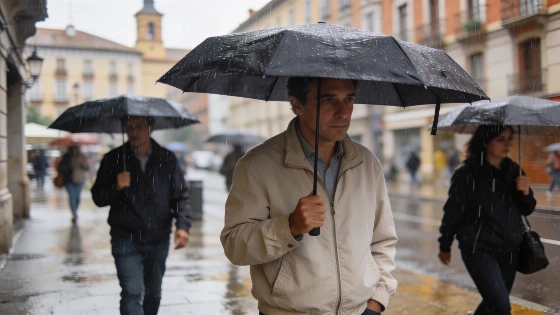
On Sunday 25 October, Spain will officially shift to winter time as clocks are set back by one hour. This annual change, mandated by law, will extend the night and alter daily routines across the country.
At 3:00 a.m. on Sunday 25 October, clocks in Spain will jump back by one hour. The country will move to winter time, as required by law. In the Canary Islands, the change happens at 2:00 a.m., shifting clocks to 1:00 a.m. For one day, Spain will have a rare twenty-five-hour calendar.
This change hits daylight first. Mornings will get brighter earlier. Evenings will turn dark sooner. The shift is more than a technical step. It shapes daily life. School runs, work commutes, and even people’s moods all feel the effect as autumn deepens.
The official calendar published in Spain's Boletín Oficial del Estado (BOE) confirms that the time change will continue at least through 2026.
Spain is not alone. Every country in the European Union follows the same schedule. All member states must change clocks on the last weekend of October. The Boletín Oficial del Estado (BOE) has set these dates through 2026. Unless the EU changes its rules, the twice-yearly time change will stay in place at least until spring and autumn of 2027.
For most people, the switch is easy. Phones, tablets, smartwatches, and internet-connected TVs update on their own. No action needed. But old clocks and some digital devices still need to be set by hand. It’s a small job, but it sticks around as a reminder of how technology shapes our sense of time.
The reason for the change goes back to the autumn equinox, which fell on 23 September. As days get shorter, the idea is to use daylight better. But many still question if it works. Official documents call the last Sunday of October the "date of termination of the summer time period." That phrase sounds dry, but the real impact lands on daily routines.
Despite ongoing political discussions in Spain and across the EU about abolishing seasonal clock changes, all current sources confirm that the system will remain in effect for the 2026 cycle, with no new reforms expected in the immediate future.
The clock change is familiar, but it always sparks debate. Some wonder if it still makes sense. For now, nothing will change. No reforms are planned. Like other yearly habits—such as the way artists adjust for live shows, as reported earlier—the time switch is part of Spanish life. Its value is still up for debate.
Spain keeps to the set schedule. This shows both a respect for European rules and a habit of sticking with what works. The result is simple. Routines shift. Nights come earlier. The country adapts again to winter’s rhythm. For now, the clock rules. The yearly change quietly shapes how Spain feels as the season turns.