The DGT’s V27 signal is set to transform road safety in Spain, but only drivers with newer, connected vehicles will benefit immediately. Older cars will be left out until the fleet is renewed.
Spain’s Directorate General of Traffic (DGT) has officially introduced the V27 signal, a digital warning system designed to alert drivers to hazards ahead. Unlike the physical V16 beacon, the V27 is a virtual signal that appears on the dashboard screens of vehicles equipped with advanced connectivity, marking a significant step toward fully networked roads.
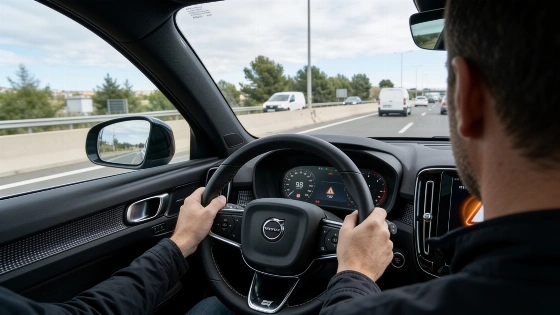
When a car breaks down or is involved in an accident, the driver activates the V16 beacon, which transmits the vehicle’s exact location to the DGT’s central platform. Within seconds, this information is processed and a telematic alert is sent to other vehicles traveling in the same direction. The V27 signal then appears on the screens of approaching cars, warning drivers to slow down and exercise caution before reaching the incident area.
Road safety is no longer just about signs and beacons — it's about how quickly information travels between vehicles.
The rollout of the V27, however, is not universal. Its effectiveness depends entirely on the age and technological capabilities of each vehicle. While previous safety measures like the V16 beacon were mandated for all, the V27’s digital nature means only cars with built-in telematics, integrated SIM cards, and real-time connectivity can receive and display the alert. For most drivers, this comes down to whether their car is a recent model or an older one lacking these features.
Newer vehicles, especially those registered in recent years, are already equipped to interact with the DGT’s 3.0 platform. In these cars, the V27 signal will be displayed automatically, requiring no action from the driver and no additional hardware. In contrast, the majority of Spain’s older fleet—still dominant on the roads—will not be able to receive these digital warnings. For these drivers, the transition to the V27 system will only happen as they replace their vehicles over time.
To avoid confusion, the DGT has clarified that the V27 does not replace the physical V16 beacon. The V16 remains the only mandatory device for marking a stopped vehicle on the road or shoulder. The V27 serves as an extra layer of digital safety, extending the warning range to several kilometers and giving drivers more time to react to unseen hazards, such as those hidden by curves or poor weather.
This move is part of a broader strategy to create a fully interconnected road network, where information flows instantly between infrastructure and vehicles. The DGT aims to reduce accidents caused by inattention or sudden slowdowns, reinforcing its commitment to innovation in road safety. As noted in a recent analysis of Spain’s vehicle inspection system, the country’s aging car fleet remains a challenge for implementing new technology.
Importantly, the V27 signal is a software-based update and does not require drivers to purchase new equipment, sidestepping the controversy that surrounded the rollout of the V16 beacon. However, the shift toward digital traffic management raises questions about data privacy and the pace at which Spain’s vehicle fleet can modernize to take full advantage of these innovations.
For context, Spain’s average vehicle age remains among the highest in Europe, which means the benefits of the V27 will be unevenly distributed for years to come. The DGT’s approach signals a future where road safety increasingly depends on the technology inside each car, making the renewal of the national fleet a key factor in the effectiveness of new digital measures.