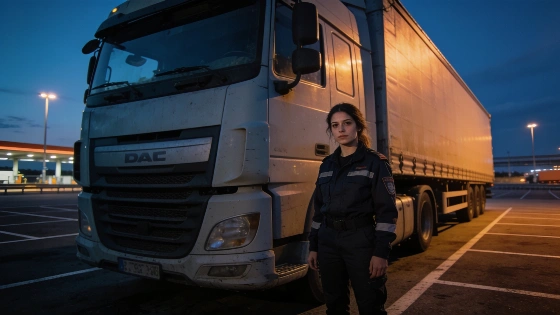
Ainoa Blasco, a 30-year-old truck driver, highlights the lack of safe and hygienic rest areas for women in Spain’s transport sector. As the country faces a severe shortage of drivers, her story reveals why many women still hesitate to join the profession.
Ainoa Blasco, 30, knows the realities of life on the road. Raised in a family of truck drivers, she has spent the past three years navigating Spain’s highways, often as one of the few women in a male-dominated industry. Her experience, shared on the podcast Rutas de Éxito, sheds light on the daily challenges that keep many women away from the driver’s seat.
Blasco describes a profession where basic needs are often unmet. “Working on the road as a woman is very difficult; there are no safe areas or places to wash up,” she says. The lack of secure rest stops, inadequate hygiene facilities, and the constant need to be vigilant in parking areas create barriers that go beyond outdated stereotypes. For many women, these conditions make the job not just uncomfortable, but risky.
Barriers for Women
Despite some progress, women remain a small minority in Spain’s road transport sector. According to figures presented at the National Congress of Women in Transport, women make up 23.5% of the logistics workforce, but only 3.8% of professional drivers. Blasco notes that surprise is still a common reaction when people see her behind the wheel of a truck—a reminder of how rare female drivers remain.
The problem is not just perception. Female truckers are calling for secure rest areas, proper showers, and workplaces free from harassment. While these issues affect all drivers, the impact is especially acute for women who spend long stretches away from home. The absence of basic facilities and the threat of unsafe environments discourage many from entering or staying in the profession.
Driver Shortage Deepens
Spain’s shortage of truck drivers is reaching critical levels. The Ministry of Transport reported in 2025 that more than 20,000 positions remain unfilled, and only 11% of new truck driving licenses go to women. The sector is also aging rapidly: over half of Spain’s truckers are older than 55, raising concerns about a wave of retirements with few young drivers to replace them.
Long hours, nights away from home, high entry costs, and pressure to meet delivery deadlines make the job unattractive to many young people. For women, these challenges are compounded by safety concerns and a lack of visible role models. The result is a workforce that is both shrinking and increasingly unbalanced.
Europe’s Response
The European Commission has been working since 2017 to address gender inequality in transport through its Women in Transport platform. Yet, the sector remains heavily male: only 22% of transport workers in the EU are women, and just 4% of truck drivers are female, according to a 2026 IRU report. Across Europe, around 502,000 truck driving jobs are currently vacant.
Efforts to attract more women are seen as essential to easing the shortage, but female professionals stress that supportive words are not enough. They are demanding real improvements: safe and dignified facilities, equal pay, accessible training, and measures that make work-life balance possible.
As Spain and Europe search for solutions to the driver crisis, stories like Blasco’s highlight the urgent need for practical changes—not just to fill vacancies, but to make the profession safer and more accessible for everyone.