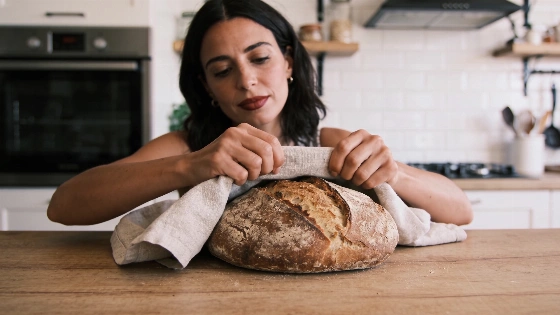
Beatriz Echeverría, founder of El Horno de Babette, explains why wrapping bread in clean linen or cotton cloth preserves its texture and flavor. Her method balances moisture and ventilation, helping loaves stay fresh longer without turning soggy or dry. The advice is gaining renewed attention among Spanish home bakers.
When Beatriz Echeverría, founder of El Horno de Babette, recommends a bread storage method, Spanish home bakers tend to listen. Her advice: skip the plastic and wrap your loaf in a clean linen or cotton cloth. This simple step, she says, can keep artisan bread fresh for up to five days in summer, provided the environment is not too humid or hot.
The method is straightforward but effective. By using a natural fabric, the bread gets enough ventilation to prevent the crust from softening, while still retaining enough moisture to keep the crumb from drying out. Echeverría cautions that the cloth should be washed with neutral soap, avoiding any softeners or perfumes that could transfer unwanted odors or flavors to the bread.
Why Cloth Works Best
According to Echeverría, the best way to store bread is to wrap it in a clean linen or cotton towel. She warns against slicing a loaf while it’s still warm, as the crumb is still settling and holds a lot of moisture. Instead, let the bread cool on a rack so steam can escape evenly, preventing the base from becoming soggy.
This approach is especially effective for large sourdough loaves and slow-fermented breads, which have a thicker crust and more crumb to protect. Slim baguettes, on the other hand, tend to dry out faster and are best eaten the same day. For longer storage, keep the cut side of the loaf covered and away from sunlight, heat, or drafts. If you plan to eat the bread within a day or two, simply place the cut side down on a wooden board.
The Downside of Plastic
Many people assume that bread hardens simply because it loses water, but the reality is more complex. As bread cools and sits, its starches undergo retrogradation, a process that firms up the crumb. Meanwhile, moisture migrates between the interior and the crust. Storing bread in an airtight plastic bag traps this moisture, causing the crust to reabsorb it and lose its crunch. That’s why a loaf can feel stale even if it’s still moist inside.
Plastic isn’t always the enemy—soft breads like brioche or sandwich loaves benefit from it. But for crusty artisan breads, airtight containers or bags create the wrong environment, especially in warm, humid kitchens where the risk of mold increases. The Community of Madrid advises keeping bread in a cool, dry place and discarding any loaf that shows signs of mold.
Should You Refrigerate Bread?
Refrigerating bread can slow down mold growth, but it comes at a cost. The cold accelerates the staling process, leaving the crumb dry and rubbery. The Community of Madrid notes that while refrigeration helps prevent mold, it worsens the bread’s texture. For short-term storage, a dry, ventilated spot out of direct sunlight is preferable.
There are exceptions. Dense, high-moisture breads or those made with ingredients that require refrigeration may need to be chilled, especially in extremely hot and humid conditions. Rye breads, for example, demand more attention than a classic white loaf. In these cases, follow the manufacturer’s instructions for packaged products, as the cloth method may not be suitable for all types.
Freezing: The Best Long-Term Solution
If you won’t finish a loaf within a few days, freezing is the most reliable way to preserve its quality. Slice the bread once it’s fully cooled, pack it in an airtight freezer bag, and freeze promptly. This minimizes air exposure and makes it easy to defrost only what you need. The Spanish food safety agency AESAN recommends setting your freezer to at least −18°C and labeling bags with the date to use older bread first.
Frozen slices can go straight into the toaster or be thawed and briefly reheated in the oven to restore the crust. However, freezing won’t revive bread that’s already stale, and repeatedly thawing and refreezing is not advised. If you spot any mold, discard the entire loaf.
For those interested in practical kitchen hacks, the debate over bread storage echoes other household dilemmas—such as whether taping suitcase wheels really keeps them clean, a topic explored in this recent analysis.
Ultimately, the right storage method depends on the type of bread, your kitchen conditions, and how quickly you plan to eat it. But for most Spanish homes, a simple linen or cotton cloth remains the gold standard for keeping good bread at its best.