The government has called key ministers to explain their handling of the Ceuta migration crisis. Hearings are set for late August. The move follows opposition demands and rising political tension.
The Spanish government has formally requested the appearance of four senior ministers before Congress to address the recent migration crisis in Ceuta. The move, confirmed by sources at La Moncloa, comes amid mounting pressure to clarify the state’s response after a record influx of migrants into the autonomous city last week.
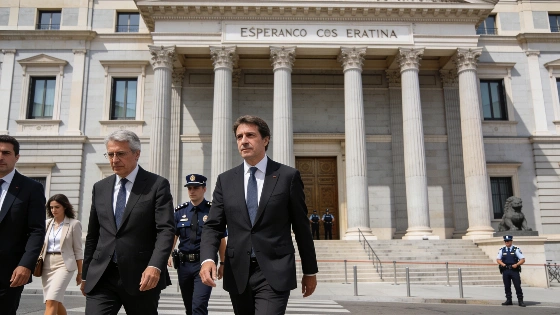
Interior Minister Fernando Grande-Marlaska, Foreign Minister José Manuel Albares, Defence Minister Margarita Robles, and Presidency Minister Félix Bolaños will each testify before the relevant parliamentary committees. According to the government’s proposal, Robles will appear on August 25, Bolaños on August 27, and both Grande-Marlaska and Albares on August 28. The hearings are intended to provide detailed explanations of the government’s management of the situation and its broader migration policy.
The decision to concentrate these appearances in Congress, rather than splitting them between the two chambers, was justified by the Presidency Ministry as a way to avoid duplication and to reflect the gravity of the issue. The government emphasized the need for transparency and factual reporting in the face of what it described as misinformation and xenophobic rhetoric. Minister Bolaños highlighted this approach in a message on X, underlining the importance of facts and openness.
The opposition Partido Popular (PP) had already submitted requests for several ministers to appear in both Congress and the Senate, as well as an urgent demand for Prime Minister Pedro Sánchez to explain the government’s cooperation with Morocco and the measures being taken to manage irregular migration flows. The PP specifically cited the unprecedented entry of 72,000 people into Ceuta in a single week, raising concerns about the capacity of Spanish security forces to respond to ongoing pressure on the borders of Ceuta and Melilla.
This parliamentary initiative follows a period of heightened political and diplomatic tension. The government’s handling of the crisis has drawn scrutiny not only from opposition parties but also from international observers. In a related development, Morocco has rejected claims of using migration as leverage, instead attributing the surge to a Spanish Supreme Court decision that allegedly weakened border controls. For further background on Morocco’s position and the legal context, see this analysis: Morocco’s response to the Ceuta migration surge.
Ceuta, a Spanish enclave on the North African coast, has long been a focal point for migration from Africa to Europe. The city’s unique status and its proximity to Morocco make it a frequent flashpoint in Spain’s migration debates. The recent events have intensified calls for a coordinated European response and have put additional strain on Spain’s border management resources. The upcoming ministerial hearings are expected to clarify the government’s strategy and address public concerns about security, cooperation with Morocco, and the future of migration policy in the region.