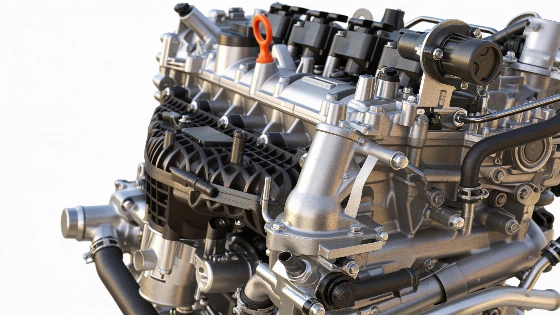
Horse Powertrain, a joint venture between Renault and Geely, has developed the D20 Methanol engine in Spain. This compact unit uses axial flux technology to extend the range of electric vehicles, aiming to reshape the future of sustainable mobility.
In Valladolid, Horse Powertrain—a partnership equally owned by Renault and Geely—has introduced a new chapter in electric mobility with the launch of its D20 Methanol engine. Designed as a compact generator for battery-powered vehicles, this innovation leverages axial flux motors to deliver both efficiency and power in a remarkably small package.
The D20 Methanol stands out for its engineering: at just 170 kg, it produces up to 141 horsepower and achieves a fuel-to-energy conversion rate of 47%. According to the company, this means only 20 liters of methanol are needed to recharge a 40 kWh battery, a figure that could significantly reduce refueling stops for long-distance drivers.
What sets the D20 apart is its use of axial flux motors, which are 46 times shorter than comparable radial designs and deliver 63% more power. The generator’s architecture mounts these motors directly onto the crankshaft, creating a pancake-like form factor that saves space without sacrificing output. The system’s electrical efficiency reaches 96.4%, requiring just 2.1 kWh of methanol to generate 1 kWh of electricity. A high-energy ignition system further enables ultra-lean methanol combustion, pushing the boundaries of what’s possible in hybrid propulsion.
Fortune Zhao, Horse Powertrain’s Chief Technology Officer, describes the D20 Methanol as a platform for next-generation propulsion, highlighting its compactness and efficiency as unprecedented in mass-market automotive applications. The axial flux approach, rarely seen in production vehicles, is central to achieving the necessary power density and size for modern electric cars.
Range-Extended Electric Vehicles
The D20 Methanol is tailored for range-extended electric vehicles (REEV), a segment gaining traction as drivers seek longer journeys without frequent charging. Horse Powertrain’s recent RGEV Medium 2.0 platform promises up to 750 kilometers of range for pure electrics and over 1,000 kilometers for REEVs, all without the need for lengthy charging stops.
At the heart of this system is a four-cylinder, 1.5-liter engine compact enough to fit in a carry-on suitcase—measuring just 50 cm long, 55 cm wide, and 27.5 cm high. This flexibility allows for both horizontal and vertical installation, offering automakers new options for vehicle design and packaging.
Compared to plug-in hybrids (PHEV), which typically offer 50–100 kilometers of electric range, REEVs equipped with the D20 Methanol can support larger batteries and deliver far greater electric-only distances. This means most daily commutes could be completed without burning a drop of fuel, while longer trips remain practical thanks to the methanol generator.
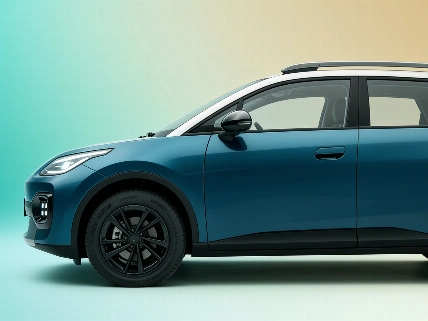
As the electric vehicle market evolves, manufacturers are racing to improve range and charging speed. For example, recent advances in battery and motor technology, such as those seen in the latest Chinese electric SUVs targeting Europe, reflect the industry’s push for more efficient and versatile solutions.
Context and Outlook
The D20 Methanol’s debut comes at a time when Spain is positioning itself as a hub for automotive innovation. Horse Powertrain’s investment in local manufacturing not only secures over 2,200 direct jobs but also signals confidence in the country’s role within the global shift to electrification.
While methanol-fueled generators are not yet widespread, their potential to extend electric vehicle range with minimal emissions could make them a key transitional technology. As infrastructure and consumer habits adapt, solutions like the D20 Methanol may help bridge the gap between today’s hybrids and tomorrow’s fully electric fleets.