A confidential police report claims Moroccan agents actively guided migrants into Ceuta. The document challenges official narratives and exposes a coordinated operation. Spain’s Interior Ministry faces new scrutiny over border control.
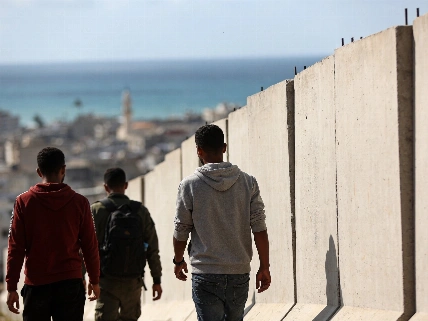
Spanish authorities are under renewed scrutiny after a confidential police report concluded that Moroccan security forces actively directed hundreds of migrants across the border into Ceuta. The document, prepared by the Centro Nacional de Inmigración y Fronteras (CENIF) and submitted to the Audiencia Nacional, describes a coordinated operation rather than a spontaneous breach.
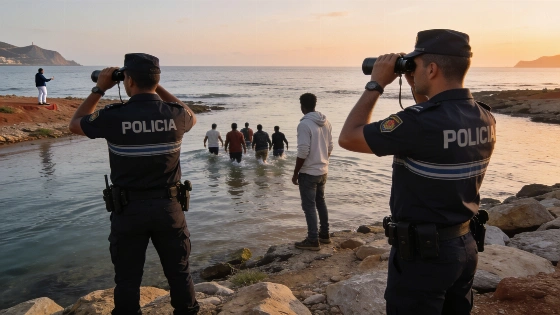
The report states that the mass entry on July 30 and 31 was not accidental. Moroccan agents are described as having "guided the crossing through the water," using migration as a formal pretext to organize a large-scale movement into Spanish territory. This directly challenges the idea that the incident was simply a lapse in border control and raises questions about the intent behind the surge.
According to Reuters and BBC, approximately 72,000 migrants crossed into Ceuta on July 30–31, with local authorities reporting at least 100 deaths during the attempt.
Reuters, BBC
The 55-page analysis draws on surveillance footage and social media communications, highlighting what it calls "permissiveness" by Moroccan security forces. According to the report, the goal was to overwhelm Spanish response capabilities and neutralize border control measures. The document is clear: the event was engineered, not incidental.
Spain’s Interior Minister, Fernando Grande-Marlaska, responded by demanding clarification from the director general of the Policía Nacional, Francisco Pardo Piqueras. In a late-night letter, Grande-Marlaska asked whether the police were handling such sensitive intelligence. Pardo Piqueras replied that the report does not formally accuse Morocco of planning or executing the crisis, but the suggestion of direct involvement is hard to ignore.
This development comes amid ongoing tensions over border management and the reliability of cooperation with Rabat. The episode recalls earlier disputes, including a previous investigation into withheld evidence during a similar Ceuta crisis, which exposed divisions within Spain’s security services.
Spain’s Prime Minister Pedro Sanchez publicly stated that Spanish intelligence and cooperation channels had no prior information that could have predicted the scale of the crisis, and that there is currently no confirmed evidence of direct involvement by Moroccan authorities. Meanwhile, Spain has requested EU assistance to process between 5,000 and 8,000 migrants who remain in Ceuta, highlighting the ongoing administrative and humanitarian challenges.
Al Jazeera
For Ceuta, a city long at the center of migration flows, the latest findings highlight the fragility of Spain’s external borders and the complexity of its relationship with Morocco. The report’s claim that migration served as a "formal cover" for a coordinated action signals a shift in the dynamics of cross-border incidents, with direct implications for national security policy.
While the Interior Ministry tries to downplay the idea of Moroccan state orchestration, the evidence presented by CENIF points to significant foreign involvement. The Spanish government now faces a choice: address the reality of external interference or risk further loss of public confidence in its ability to secure the border. These reports suggest that Spain’s border security is not just a matter of local enforcement, but a test of diplomatic and operational readiness under external pressure.