A makeshift migrant camp on Ceuta’s El Trampolín beach is growing rapidly. Self-organised services and daily routines have emerged, but so have tensions and unsanitary conditions. The situation highlights ongoing migration pressures.
On Ceuta’s El Trampolín beach, a sprawling informal settlement of migrants from sub-Saharan Africa and North Africa has rapidly taken shape. Over the past two weeks, dozens of men have built a community of cardboard shelters and palm fronds, transforming the shoreline into a densely packed camp. The area, just below the full Centro de Estancia Temporal de Inmigrantes (CETI), has become a last resort for those unable to secure a place in official accommodation after crossing from Morocco.
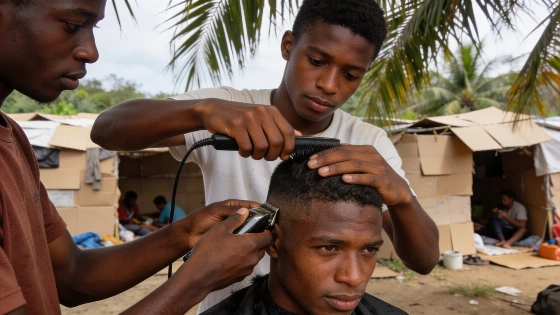
Among the new arrivals is Hamed Salah al-Din, a 31-year-old barber from Sudan who fled war and humanitarian crisis in 2025. After a perilous journey through Libya and Algeria, he now uses his skills to offer haircuts to fellow migrants, charging a small fee or working for free for friends. His makeshift barbershop, assembled from found objects and gifts, has become a focal point in the camp’s daily life. Nearby, others have marked out a mosque in the sand, using empty milk cartons for walls and a broken pipe as a minaret, reflecting the community’s efforts to maintain routines and dignity despite harsh conditions.
Sanitation remains a challenge. The only public toilets on the beach are kept clean by volunteers, but not all use them, and waste accumulates around the camp. Red Cross distributes food to thousands, but not all stay overnight. Some migrants cook with basic equipment in their shelters, sourcing food from local shops or fishing in the sea. Recreational activities, such as football matches and impromptu wrestling tournaments, provide distraction and a sense of normalcy, even as the camp’s population grows and resources are stretched thin.
Social tensions are mounting. On Sunday, a group of Maghrebi migrants staged a sit-in, refusing food and demanding asylum, frustrated by perceived differences in how cases are handled. Chants of “All migrants are equal!” echoed through the camp, highlighting divisions between those fleeing war, like Hamed, and others seeking better opportunities. As night falls, fires are lit for warmth, and the presence of police patrols and cargo ships offshore underscores the precariousness of the situation.
While the Red Cross estimates it serves up to 4,000 people, the exact number sleeping on El Trampolín remains unclear. The camp’s growth and the self-organisation of its residents mirror patterns seen in other migration hotspots across Spain. For context, recent demographic shifts in Spain have also drawn attention, such as the notable increase in centenarians in Galicia, as explored in a recent analysis of longevity trends. Both cases reflect how local realities are shaped by broader social and migratory movements.
Ceuta’s unique position at the crossroads of Africa and Europe continues to make it a focal point for migration. The situation at El Trampolín highlights the ongoing challenges faced by authorities and humanitarian groups in managing arrivals, providing basic services, and addressing the needs of a diverse and vulnerable population. As the camp evolves, the balance between resilience, self-organisation, and rising tensions remains fragile, underscoring the complexity of migration on Spain’s borders.